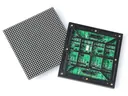
 Outdoor SMD Screens
 Indoor SMD Screens
 Flexible SMD Screens

SMD Screens in Medical Applications: Improving Healthcare Visualization
Where SMD LED screens fit in healthcare: patient information, wayfinding, education, and status or team-viewing walls in theatres and control…

Large LED screens have become a familiar part of live sport. Screens built with Surface-Mount Device (SMD) LED packages are widely used in arenas and stadiums to show live footage, replays, scores and sponsor content.
This article explains how SMD screens in sports arenas can help spectators, how screen size and pixel pitch determine resolution, and what to consider when planning screens for a venue.

SMD screens help venues show the game and related content on a large scale. Key benefits include:
Content can be tailored to different sports, teams and events, helping venues create a consistent experience for fans.

How clear a screen looks depends mainly on its size, pixel pitch and the viewing distance. A finer pitch suits spectators close to the screen, while a coarser pitch can work for screens viewed from far away.
SMD screens generally offer wide viewing angles, but no single screen suits every seat. Spectators at sharp angles, behind structures or very far away may see less. Large venues often use several screens, or screens on more than one side, to give more of the crowd a good view.
Outdoor stadium screens also need enough brightness for daytime matches, an outdoor IP rating and an operating temperature range suited to the climate.

Screens help keep spectators involved during the game and in breaks:
The screen displays the content; live graphics, statistics and interactive features come from the venue’s production and control systems. Check that the screen’s refresh rate suits any TV cameras covering the event.

Placement matters as much as specification. Common positions include main screens at the ends or sides of the ground, centre-hung screens in indoor arenas, perimeter (ribbon) screens around the field and screens at entrances or concourses. Plan placement using sightline drawings so more of the seating has a clear view, and avoid placing screens where they could distract players or officials.
Screens and structures must be designed by qualified structural engineers, with electrical work and earthing by qualified electricians, following the manufacturer’s guidance.
How screen size and pixel pitch set resolution
An LED screen’s native resolution is its size divided by the pixel pitch, so a size in feet alone does not define resolution. The examples below are illustrative; real screens are built from cabinets, so exact sizes and resolutions depend on the cabinet dimensions.
| Screen Size (width × height) | Pixel Pitch | Native Resolution |
|---|---|---|
| 3.84 m × 2.16 m | 2 mm | 1920 × 1080 |
| 7.68 m × 4.32 m | 4 mm | 1920 × 1080 |
| 7.68 m × 4.32 m | 2 mm | 3840 × 2160 |
For example, 7,680 mm ÷ 4 mm = 1,920 pixels across. The same size at a finer pitch gives a higher resolution, but costs more and is only worthwhile if spectators sit close enough to benefit.
Q: What are SMD screens and how do they help spectators in sports arenas?
A: SMD screens are LED displays built from Surface-Mount Device LED packages. In sports venues they show live footage, replays, statistics and other content on a large scale.
Q: How do SMD screens improve the viewing experience?
A: Large, bright images help spectators far from the action see details. The result depends on screen size, pixel pitch, brightness and placement relative to the seating.
Q: What advantages do SMD screens offer over older display types?
A: Compared with older DIP LED screens, SMD screens usually allow finer pitches and wider viewing angles. Outdoor models are designed for weather within the manufacturer’s limits, but still need a suitable structure, cooling and maintenance.
Q: Can SMD screens display real-time information during matches?
A: Yes, when connected to scoring, graphics and production systems that provide the live data.
Q: How are SMD screens beneficial for advertisers?
A: They give sponsors a visible platform during events, with content that can be rotated and changed.
Q: Are SMD screens customizable to fit different sports arenas?
A: Yes. They are modular and can be built in many sizes, including ribbon and some curved formats, within the limits of the cabinet design.
Q: How do SMD screens contribute to venue revenue?
A: Venues can sell advertising and sponsorship on screens. How much income this brings depends on the venue, events and audience.
Q: How should a venue choose screen size and resolution?
A: Start with the viewing distances and sightlines, choose a pixel pitch suited to them, then size the screen. Native resolution = screen size ÷ pixel pitch.
Q: How will SMD screens develop in sports entertainment?
A: Finer pitches, better camera compatibility and new formats are likely to keep developing, along with improved content systems.
SMD screens have become an important part of the live sport experience, showing replays, statistics and sponsor content on a large scale. Getting good results depends on choosing the right pixel pitch for the viewing distance, enough brightness for the environment, careful placement and safe, professional installation.
With good planning, screens can help more spectators follow the action and add to the atmosphere of the event.
Planning an outdoor screen? Compare weatherproof options on our outdoor SMD screens page, check the specifications of the BIA Outdoor SMD Screen Module, or read which pixel pitch suits an outdoor screen.
Contact Us For Free Consultation at 0306-1333384
Powered By BIA Communications

Where SMD LED screens fit in healthcare: patient information, wayfinding, education, and status or team-viewing walls in theatres and control…

"SMD" (Surface-Mount Device) is a way of mounting components on circuit boards, and it is used throughout consumer electronics. This…

How thin cabinets and flexible LED modules let SMD LED screens follow curves, wrap columns and fit tight spaces, how…