 Outdoor SMD Screens
 Indoor SMD Screens
 Flexible SMD Screens

SMD and LED Screens for Home Theaters: A Buyer’s Guide
LED Screens for Home Theaters: 10 Options to Consider Note: This is an overview of well-known LED display options for…


A well-chosen display can help a business attract customers, share information and present its brand. Choosing the right SMD (Surface Mount Device) LED screen means matching the screen to your site, your viewers and your content. This guide covers the main points to check.
An SMD screen is a type of LED display. Each pixel is usually a small surface-mounted package containing red, green and blue LED chips, soldered directly onto the surface of the module’s circuit board. Compared with older DIP (through-hole) LED displays, SMD packaging generally allows finer pixel pitches and more uniform colour. SMD screens are used in retail, corporate, event and outdoor advertising settings.
With a pixel pitch suited to the viewing distance, SMD screens can show clear, detailed content. A screen that is too coarse for its viewing distance will look pixelated.
Power consumption depends on the product, size, brightness setting and content. Compare datasheet figures for average and maximum power, and use brightness control to reduce consumption when full brightness is not needed.
Good-quality screens are designed for long operating hours. Lifespan depends on the product, operating conditions and maintenance; check the manufacturer’s rated lifetime and warranty.
Because SMD screens are built from modules and cabinets, they can be configured in many sizes to fit specific spaces.
Indoor SMD screens are designed for interior use, such as retail stores and conference rooms. They should not be used outdoors or in wet areas.
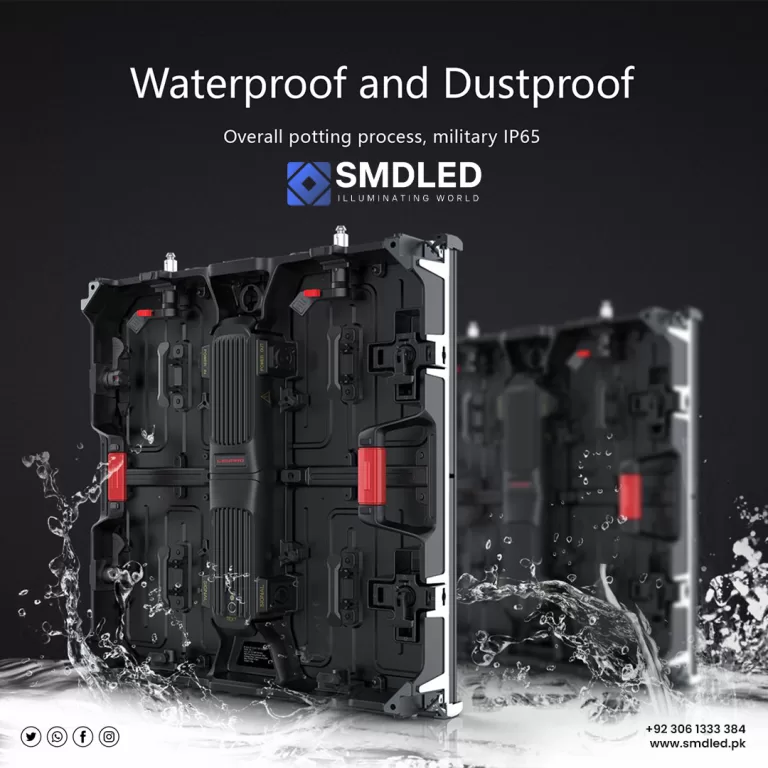
Outdoor screens are designed with higher brightness for daylight and sealed modules and cabinets rated to an IP level for rain and dust, when installed correctly.
Flexible SMD screens use bendable modules that can follow curved surfaces, within the bend limits set by the manufacturer.
Resolution depends on pixel pitch and screen size. Choose a resolution that suits your content and viewing distance.
Choose brightness for the environment: outdoor screens in sunlight need much higher brightness than indoor screens. Too much brightness indoors or at night is uncomfortable and wastes power.
Higher contrast helps images look clearer, especially in bright conditions.
A higher refresh rate reduces flicker and scan lines, which matters for video and if the screen will be filmed by cameras.
Check the horizontal and vertical viewing angles against where people will stand or pass.
Pixel pitch refers to the distance between the centres of two adjacent pixels. It is measured in millimetres.
A smaller pixel pitch means higher pixel density and sharper images at close range, but usually a higher cost.
For close viewing, choose a smaller pixel pitch. For large screens viewed from a distance, a larger pixel pitch is usually sufficient.
Measure your space and consider the viewing distance and the wall or structure that will support the screen.
16:9 matches most video content; other ratios suit banners or columns. Because screens are modular, the final size depends on the cabinet dimensions.
Outdoor screens face rain, dust, wind and heat. Use only outdoor-rated products and check the IP rating.
Outdoor screens need high brightness and suitable weather protection. The supporting structure and wind loads should be assessed by a qualified structural engineer.
LED screens involve mains electricity, heavy cabinets and often work at height. Installation should be carried out by trained installers, with electrical work by a qualified electrician and structures checked by a qualified engineer. Do not attempt DIY installation of mains wiring or mounting structures.
Follow the manufacturer’s maintenance and cleaning instructions. Switch off and isolate the screen before cleaning or inspection, use a soft dry brush or cloth, and do not spray water or liquids onto modules unless the manufacturer specifically allows it. Keep ventilation paths clear.
Simple checks, such as confirming the content source and controller settings, can be done by trained users. Faults such as dead pixels, failed modules or power problems should be handled by trained technicians or your supplier.
Balance the initial cost against quality, support and warranty. A better-built screen can mean fewer faults.
Consider running costs, maintenance, spare parts availability and support when comparing options, not only the purchase cost.
BIA SMD Screens is SMDLED’s own brand. Whichever supplier you choose, ask for datasheets, warranty terms and support arrangements in writing.
Online research is convenient, while seeing a screen in person lets you judge brightness, colour and build quality before you buy.
Retailers use SMD screens to promote products and create an engaging shop environment.
In offices, fine-pitch indoor LED screens are used for presentations, meetings and internal communication.
Airports, stations and other public spaces use LED screens for information and advertising, typically linked to the operator’s own systems.
Finer pixel pitches, COB (chip-on-board) packaging and micro LED are developing areas.
These developments may give businesses more options for close-viewing and high-quality displays.
Understand and prioritise essential specifications such as pixel pitch, brightness and IP rating.
Plan for regular maintenance, spare parts and support.
Choose a screen suited to its environment, whether indoor or outdoor.
Choosing the right SMD screen for your business means considering pixel pitch, brightness, environment, installation, maintenance and support together. Taking these into account will help you choose a screen that suits your site and your goals.
SMD screens are LED screens. They combine red, green and blue LED chips in one surface-mounted package, which generally allows finer pitches and better colour consistency than older DIP LED screens.
Follow the manufacturer’s instructions. Typically, switch off and isolate the screen first, remove dust with a soft dry brush or cloth, and avoid spraying liquids onto the modules. Keep vents clear so the screen does not overheat.
Yes, outdoor SMD screens are designed with weather protection and higher brightness for daylight, provided they are installed correctly.
Product quality, operating hours, brightness, temperature, environment and maintenance. Proper installation and regular upkeep help.
Flexible SMD screens suit curved surfaces or creative installations. Check your design against the manufacturer’s bend limits.
LED Screens for Home Theaters: 10 Options to Consider Note: This is an overview of well-known LED display options for…
What a video wall is, how LED, LCD and projection video walls differ, where they are used, and how to…
Where to buy SMD screens in Pakistan, what types are available, and how to check any supplier before you buy,…