
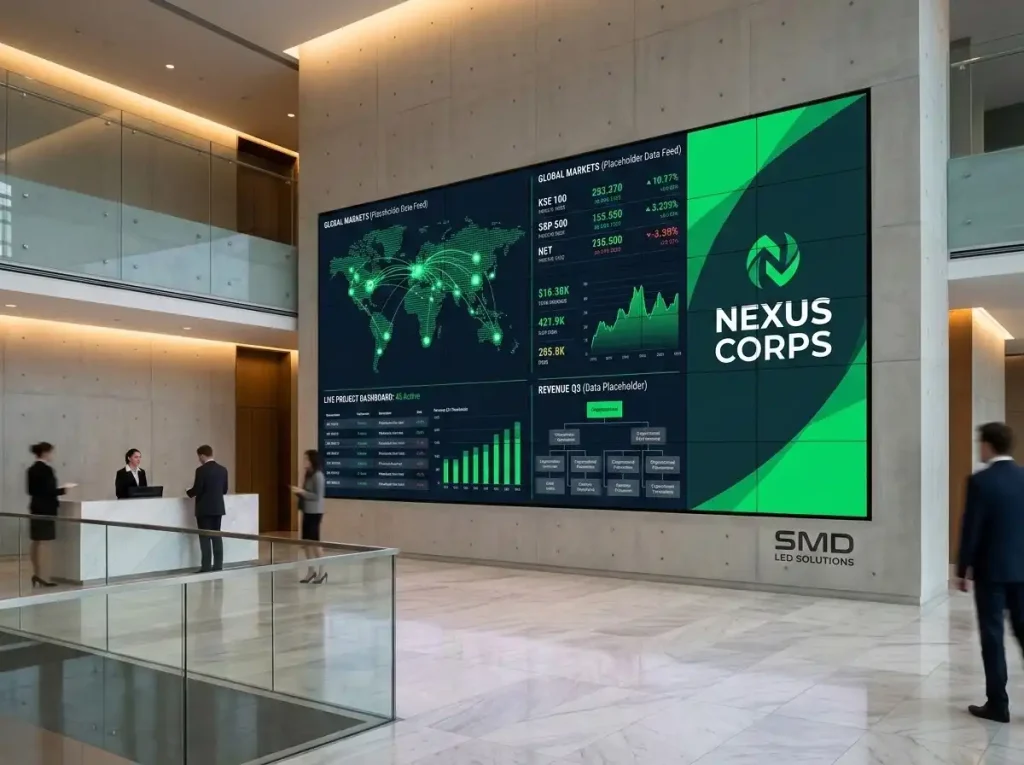
A digital advertising campaign has to do more than occupy space. It needs to deliver the right message, at the right location, and often at the right time of day. This becomes difficult when businesses depend on printed banners that remain unchanged until someone physically replaces them.
SMD screens give advertisers a more flexible way to manage commercial messaging. A single display can support different campaigns throughout the day, switch between promotional content, and deliver video-based visuals in places where businesses compete heavily for attention.
For companies operating in Pakistan’s busy retail and commercial environments, this flexibility can change how advertising space is used.
One Screen Can Support More Than One Campaign
A printed billboard generally communicates one message until it is replaced. A digital display does not have to work that way.
A retailer could promote breakfast offers in the morning, highlight a midday promotion later in the day, and switch to an evening campaign without changing the physical display.
The same principle can work for:
- Seasonal promotions
- Limited-time discounts
- Product launches
- Brand announcements
- Event promotions
- Corporate communications
This gives marketing teams greater control over their advertising inventory. Instead of treating a display as a single fixed message, businesses can turn it into a programmable communication channel.
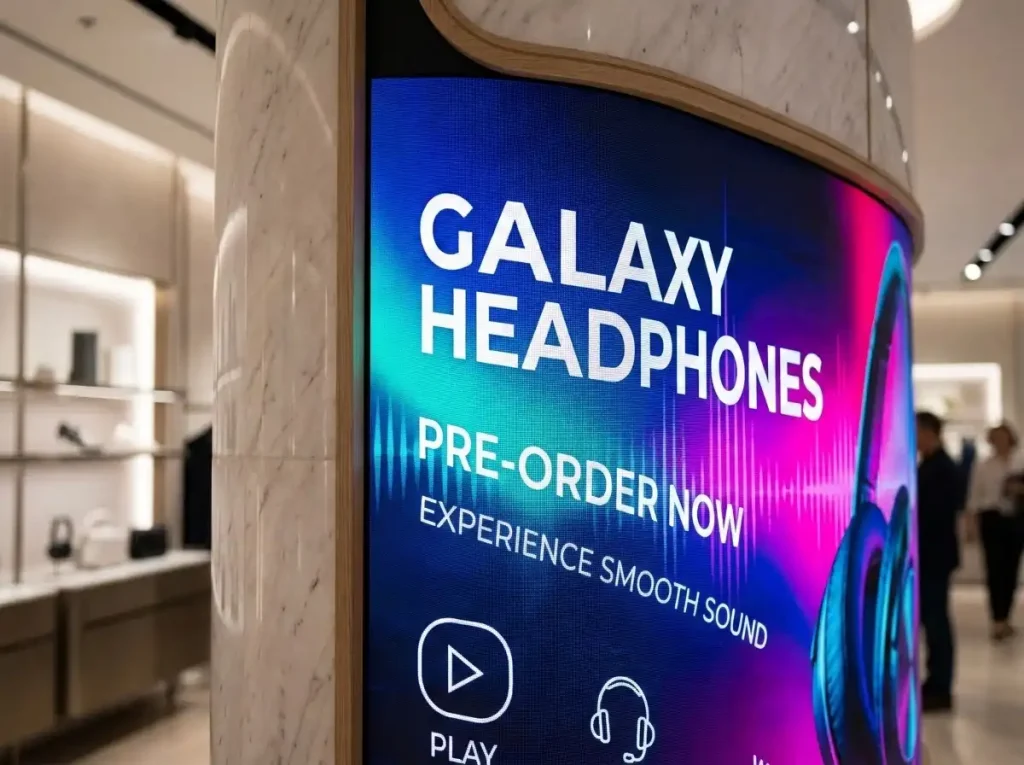
What Changes When Content Becomes Digital?
The biggest difference is not simply that the screen is brighter. It is the ability to change the message without replacing the physical advertising surface.
Marketing teams can prepare different images, videos, animations, and promotional messages and schedule them according to their campaign requirements.
For example, a shopping center may run one content sequence during normal hours and introduce a different promotional loop during a major sale. A corporate building can use the same display for company branding, announcements, and event information.
This makes the advertising space more adaptable to changing business needs.
The Location Still Determines the Result
A high-quality display cannot compensate for poor placement.
Before installing an SMD screen, businesses should consider what the audience will actually experience at the proposed location. A screen positioned too high, facing excessive glare, or placed where viewers cannot comfortably see it may deliver weaker results regardless of its hardware quality.
Consider the environment around the display:
Retail storefronts can use digital screens to communicate offers to people approaching the entrance.
Shopping malls can position displays along high-traffic areas where customers naturally pause or pass through.
Corporate buildings can use indoor displays in reception areas and common spaces for branding or communication.
Events and exhibitions can use large-format LED displays to support stage visuals, sponsor content, and presentations.
Outdoor advertising locations require additional attention to brightness, weather resistance, viewing distance, and structural installation.
The objective is to match the screen to the behavior of the people who will see it.
Better Advertising Starts With Better Content
Even an advanced display cannot produce strong advertising results if the content is difficult to understand.
SMD screens give businesses access to motion graphics and video, but that does not mean every campaign should contain complicated visual effects. Clear branding, readable text, strong imagery, and a focused message remain important.
Content should be designed around how people actually view the display.
A person walking past a retail screen may only have a few seconds to understand the message. Drivers viewing an outdoor display have even less opportunity to process detailed information. Longer messages may work better in locations where audiences naturally pause.
The screen provides the platform. The campaign content determines how effectively that platform communicates.
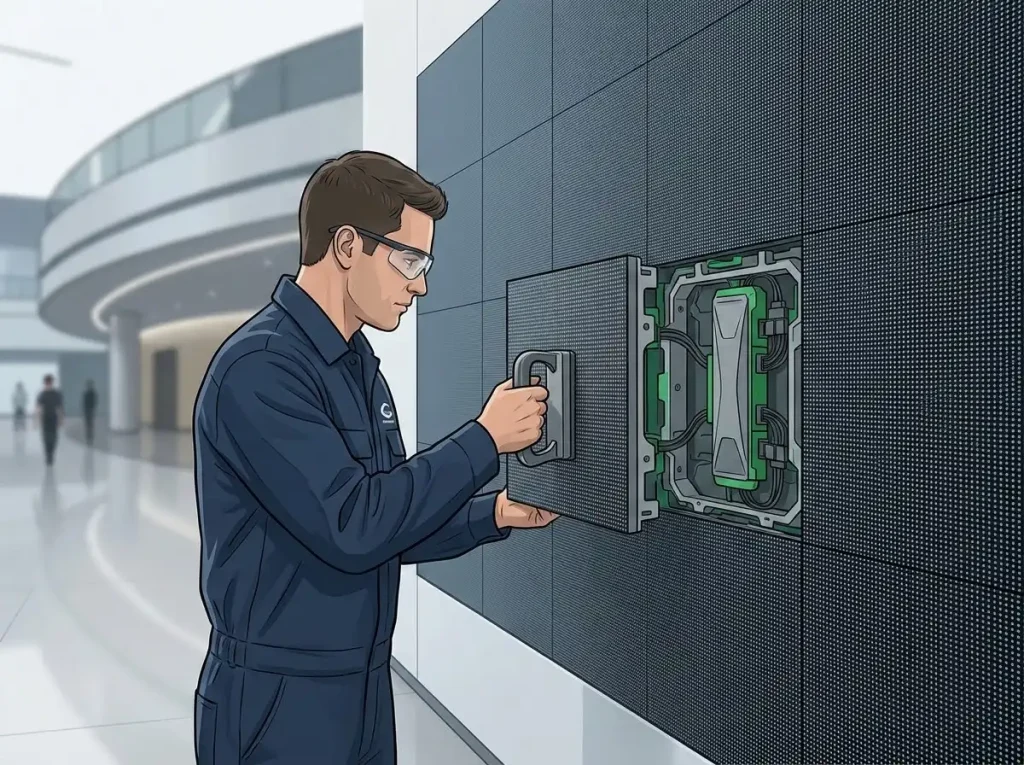
The Hardware Behind Consistent Visual Quality
Once the advertising objective and location are established, hardware specifications become much more relevant.
Pixel pitch affects the level of detail that can be comfortably viewed from a particular distance. Brightness becomes especially important in outdoor environments where direct sunlight can reduce perceived contrast. Refresh rate matters when the display is showing video content or when it is being captured on camera.
Other considerations include:
- Screen resolution for text and graphic clarity
- Viewing angle for audiences approaching from different directions
- Power requirements for ongoing operation
- Cabinet and module design for service access
- Weather protection for outdoor installations
The correct specification depends on the installation rather than on choosing the highest number available for every category.
From Advertising Space to Marketing Asset
A well-planned digital display can become useful beyond a single promotional campaign.
A retailer can use it for advertising during business hours and promotional announcements during special events. A corporate office can combine brand communication with internal announcements. An event organizer can use the same type of system for sponsor visibility, presentations, and stage content.
This wider range of uses can make the display a more practical long-term asset than a format designed for one fixed campaign.
Businesses should therefore consider not only today’s advertising message, but also how the screen may be used six months or a year after installation.
What Should Be Evaluated Before Buying?
The right purchase starts with the project rather than the product catalogue.
Ask these questions before finalizing an SMD display:
- Where will the audience stand? This helps determine the appropriate pixel pitch and screen resolution.
- Will the screen be indoors or outdoors? Outdoor installations need specifications suited to sunlight, dust, moisture, and temperature conditions.
- What type of content will be shown? Static graphics, text, animation, video, and live feeds can place different demands on the display system.
- How often will content change? Frequent campaign updates make reliable content-management functionality particularly valuable.
- How will the screen be serviced? Access to modules and supporting components should be considered before installation.
- How large should the display be? Screen dimensions should reflect the viewing environment, available space, and intended advertising purpose.
- Who will provide technical support? Local installation and maintenance support can simplify troubleshooting and long-term servicing.
Measuring Value Beyond the Screen
The value of a digital advertising display should not be judged by its specifications alone.
Businesses can assess whether the installation is supporting their marketing objectives by reviewing factors such as campaign flexibility, content frequency, audience exposure, promotional response, and how effectively the screen is being used throughout the day.
A screen that sits unused or carries the same content for months may not deliver its full potential. A well-managed display, on the other hand, can support multiple campaigns and adapt as the business changes.
That is why the most effective approach combines suitable hardware, strategic placement, useful content, and consistent management.
Build a More Flexible Advertising Platform
SMD screens give businesses a practical way to move beyond fixed advertising formats. Instead of replacing a physical banner every time a promotion changes, companies can manage multiple messages through one programmable display.
The right solution depends on your location, audience, content requirements, and operating environment.
SMD LED provides commercial LED display solutions across Pakistan, helping businesses plan, install, and maintain digital advertising systems suited to their specific spaces.
Have a digital advertising project in mind? Contact SMD LED to discuss your display requirements.
Frequently Asked Questions
Can one SMD screen display multiple advertisements?
Yes. Digital displays can be programmed to show different images, videos, and promotional messages according to a planned content schedule.
Are SMD screens useful for changing promotions?
Yes. Their programmable nature allows businesses to update campaigns without physically replacing printed advertising material.
What pixel pitch is suitable for an advertising screen?
The appropriate pixel pitch depends mainly on the viewing distance and the amount of detail the audience needs to see.
Are SMD screens suitable for outdoor advertising?
Certain SMD display systems are designed for outdoor use with appropriate brightness, weather protection, and cabinet construction. The specific environmental requirements should be assessed before installation.
Does screen placement affect advertising performance?
Yes. Viewing distance, audience movement, surrounding lighting, screen height, and viewing angles can all influence how effectively people see and understand the displayed content.