
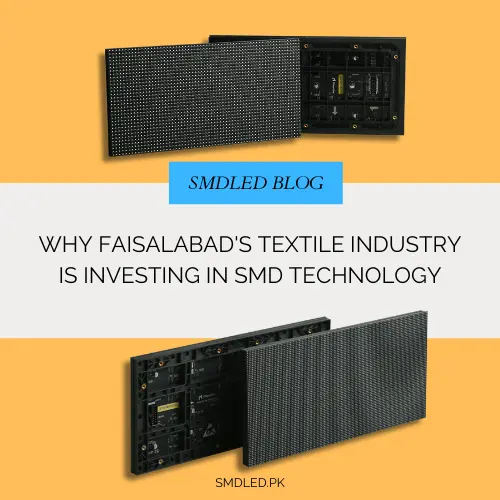
For decades, the rhythmic clatter of power looms has been the heartbeat of Faisalabad. But in 2025, a new sound is humming in the background—the quiet efficiency of digital servers. The textile sector, facing fierce competition from Bangladesh and Vietnam, is rapidly modernizing. At the forefront of this shift is the adoption of Faisalabad textile industry SMD technology.
Gone are the days of chalkboards and printed shift schedules. Today, mills in the M-3 Industrial City and Khurianwala are installing massive indoor and outdoor SMD screens. But why the sudden surge in investment? It’s not just about aesthetics; it’s about data, efficiency, and survival in the Industry 4.0 era.
1. Real-Time Production Monitoring (The Digital Dashboard)
The primary driver for Faisalabad textile industry SMD technology is the need for real-time data. In a spinning or weaving mill, every second of downtime costs money.
The Problem with Old Methods
Traditionally, floor managers would manually update whiteboards with production targets vs. actual output. This data was often hours old by the time it was viewed, leading to delayed reactions to machine faults.
The SMD Solution
Factories are now installing P2.5 Indoor SMD Screens directly on the production floor. These screens are connected to the mill’s ERP system (Enterprise Resource Planning).
- Live Data: Workers can see exactly how many meters of fabric have been produced vs. the hourly target.
- Fault Alerts: If a machine stops, the screen flashes red, alerting maintenance teams immediately.
- Efficiency: Studies show that visible, real-time targets increase worker productivity by up to 15%.
2. Elevating the “Client Visit” Experience
Faisalabad’s textile tycoons frequently host buyers from brands like Nike, Adidas, and Zara. First impressions matter.
The Corporate Showroom
Leading exporters are transforming their boardrooms and display centers with BIA HDR 4K LED Video Walls.
- Virtual Tours: Instead of walking through a hot, noisy factory, clients can watch a 4K drone tour of the facility on a massive wall-to-wall screen.
- Fabric Detailing: High-resolution P1.5 screens allow clients to zoom in on fabric textures and weave patterns digitally, showcasing the quality of the product without needing physical samples of every variant.
3. Worker Safety and Communication
With thousands of workers in a single shift, communication is a logistical nightmare. Faisalabad textile industry SMD technology provides a centralized solution.
Outdoor Safety Boards
Large P6 or P8 Outdoor Screens installed at factory gates serve a dual purpose:
- Shift Schedules: Displaying shift timings and transport information.
- Safety Stats: Broadcasting “Days Without Accident” and safety training videos during shift changes.
- Emergency Alerts: In case of fire or drills, the screens instantly switch to evacuation instructions, potentially saving lives.
4. The Challenge: Dust and Heat
Faisalabad’s environment is hostile to electronics. The cotton fluff (flying fibers) inside spinning mills and the scorching outdoor heat can destroy standard screens.
The “Industrial Grade” Difference
This is where specialized hardware comes in. At SMD LED, we supply screens specifically engineered for the Faisalabad textile industry SMD technology demand:
- Sealed Cabinets: Our industrial modules feature conformal coating on PCBs to prevent cotton dust from causing short circuits.
- Fanless Cooling: For indoor textile halls, we use fanless power supplies to avoid sucking in cotton fibers.
- High-Temp Resistance: Outdoor units are tested to withstand 50°C+, ensuring they don’t black out during the peak Punjab summer.
5. Cost vs. ROI Analysis
For a factory owner, every rupee must yield a return. Is investing millions in digital screens worth it?
| Investment Area | Application | ROI Timeline | Impact |
|---|---|---|---|
| Production Floor | P3/P4 LED Dashboard | 6-9 Months | Reduced downtime, higher output per shift |
| Main Gate | P8 Outdoor Display | 12-18 Months | Better worker compliance, modernized brand image |
| Boardroom | P1.8 4K Wall | Instant | Higher conversion rate during client pitches |
The initial cost of Faisalabad textile industry SMD technology is offset by the reduction in paper waste, the elimination of manual data entry errors, and the boost in operational efficiency.
Conclusion
The textile barons of Faisalabad are not just buying screens; they are buying control. In an industry where margins are measured in cents, the visibility provided by digital dashboards is a game-changer. From the rugged outdoor screens at the gates of Sitara Textile to the sleek video walls in the boardrooms of Interloop, Faisalabad textile industry SMD technology is defining the future of Pakistani manufacturing.
If you run an industrial unit and want to modernize your operations, don’t settle for consumer-grade TVs that will fail in months. Invest in robust, industrial-grade SMD solutions designed for the grind of the textile sector.
Visit our Products Page to explore our industrial series, or Contact Us for a site survey of your factory.
Frequently Asked Questions (FAQs)
1. Can SMD screens survive inside a spinning mill with high cotton dust? Yes, but only if they are “Industrial Grade.” Standard screens will fail as cotton dust clogs the fans. For Faisalabad textile industry SMD technology, we recommend fanless designs with fully sealed (IP5x rated) indoor cabinets to prevent fiber ingress.
2. What is the best size for a production floor dashboard? For a standard production hall, a 10ft x 6ft screen is ideal. This size allows workers to read the data from 30-40 feet away. A P3 or P4 pixel pitch is sufficient for this viewing distance and offers the best cost-to-performance ratio.
3. How do we connect the SMD screen to our loom machines? The screen connects to a computer or controller card (like Novastar). Your IT team can connect this computer to your ERP database via HDMI or network. We provide the hardware integration support to ensure your live data feeds directly to the display.
4. Is it expensive to run these screens 24/7? Modern SMD screens are energy efficient. An indoor P3 screen consumes roughly the same power as a few industrial light bulbs. For 24/7 operations, we use high-efficiency power supplies (G-Energy or Meanwell) that reduce electricity costs and heat generation.
5. Can we use the outdoor screen for advertising? Absolutely. Many factories in M-3 Industrial City use their outdoor gate screens to display their own brand ads, welcome foreign delegations, or even rent out slots to allied vendors (like machinery suppliers) to generate extra revenue.
CTA
Ready to bring Industry 4.0 to your factory floor? Get a rugged, high-performance display solution tailored for Faisalabad’s industrial needs. Contact our team today and transform how you monitor production!