 Outdoor SMD Screens
 Indoor SMD Screens
 Flexible SMD Screens

Choosing the Right SMD Screen for Your Project: A Comprehensive Guide
A practical guide to choosing an SMD LED screen for your project: indoor vs outdoor, full-colour vs single-colour, pixel pitch,…

SMD (Surface-Mount Device) LED screens are modular, direct-view displays: each pixel is an LED package, usually containing red, green and blue chips, that makes its own light, with no backlight. They are used for video walls, billboards, stages and signage. This article looks at the trends shaping these screens and what they mean for anyone planning a project. Where we discuss the future, these are general industry directions, not guaranteed outcomes.

Finer pixel pitches. Indoor LED walls are available in increasingly fine pitches, which lets them reach high resolutions at smaller sizes and be viewed from closer. This is why LED walls now appear in boardrooms, control rooms and broadcast studios, not just on billboards.
Flexible and curved formats. Flexible LED modules and curved cabinets allow columns, curves and creative shapes, within the bend limits the manufacturer states.
For an LED wall, resolution depends on both size and pixel pitch (native resolution = size ÷ pitch). The examples below are illustrative; exact sizes depend on cabinet dimensions.
Table 1: Screen size needed for common resolutions
| Resolution (pixels) | Pixel Pitch | Approximate Screen Size (W × H) |
|---|---|---|
| Full HD (1920 × 1080) | 2.5 mm | 4.8 m × 2.7 m |
| 4K UHD (3840 × 2160) | 1.25 mm | 4.8 m × 2.7 m |
| 8K UHD (7680 × 4320) | 0.9 mm | about 6.9 m × 3.9 m |
This is different from pixel density in phones and TVs, which is measured in pixels per inch (PPI) and achieved with LCD or OLED panels.

These are general industry directions; how quickly they spread will depend on cost and demand.

SMD LED screens have moved from coarse outdoor signs to a wide range of products. Higher pixel densities improve image quality for video walls and digital signage. When cabinets are well aligned and calibrated, large walls can look almost seamless.
Flexible LED display technology allows curved and wrap-around installations in malls, venues and architecture.
For outdoor use, manufacturers continue to improve brightness, weather protection and heat management. Performance still depends on the installation, structure and maintenance.

Q: What are SMD screens and how do they work?
A: SMD screens are LED displays where each pixel is a Surface-Mount Device LED package (usually with red, green and blue chips) mounted on a module. The LEDs emit light directly; there is no backlight. Modules are combined into cabinets and screens.
Q: What are some current trends?
A: Finer pixel pitches, flexible and curved formats, COB and microLED packaging, and better calibration and efficiency.
Q: How are SMD screens adapted for outdoor environments?
A: Outdoor models have higher brightness, IP-rated protection against dust and water, and designs for heat management. They still need suitable structures, power and maintenance.
Q: Are LED screens becoming more energy-efficient?
A: Yes, through more efficient LEDs, power supplies and driving methods, plus automatic dimming. Actual power use depends on size, brightness and content.
Q: What about seamless video walls?
A: Well-aligned, calibrated LED cabinets can create walls without the bezels of tiled LCDs.
Q: What role could AI play?
A: AI-based tools may help with content scheduling, monitoring and image processing in some systems. Any audience analysis must follow privacy law.
Q: What other developments might come?
A: Transparent LED screens for glass facades and shopfronts, and further growth of fine-pitch indoor walls, are likely directions.
Q: How will costs change?
A: Costs depend on pitch, size and specification. Fine-pitch technology has tended to become more widely available over time, but there is no guarantee for any particular product.
SMD LED screens continue to develop, with finer pitches, new formats and better efficiency. Alongside them, COB and microLED are growing in fine-pitch displays. For anyone planning a project, the fundamentals stay the same: choose the right pitch for the viewing distance, specify quality components, plan the environment and installation carefully, and consider energy use and sustainability.
Choosing a screen? Start with pixel pitch explained, compare indoor and outdoor screens, or browse our SMD screen products.
Contact Us For Free Consultation at 0306-1333384
Powered By BIA Communications
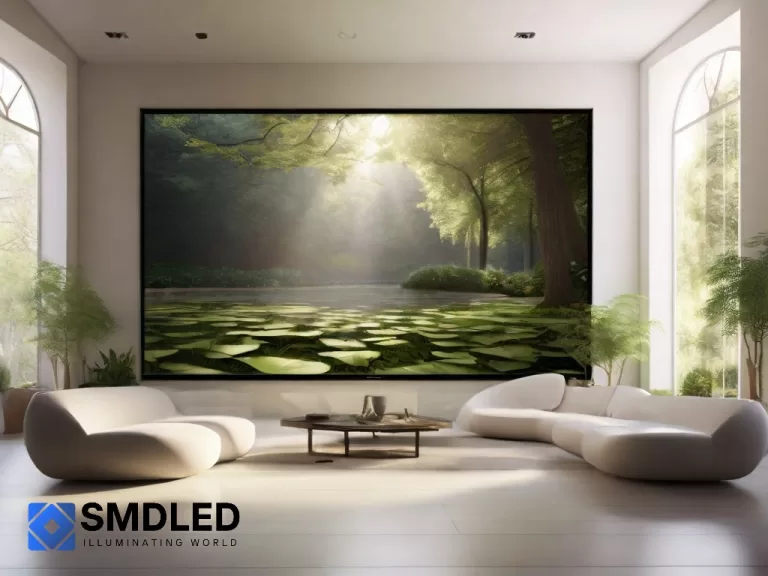
A practical guide to choosing an SMD LED screen for your project: indoor vs outdoor, full-colour vs single-colour, pixel pitch,…
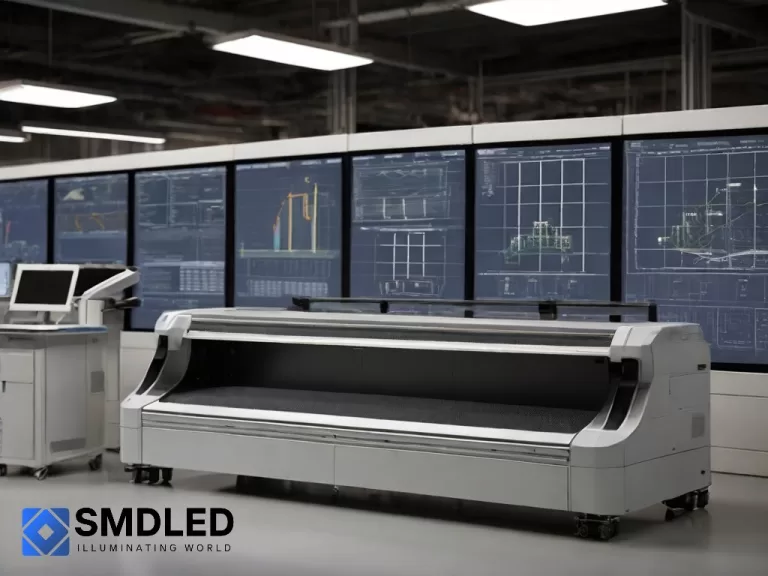
SMD LED screens are used in factories, warehouses and logistics sites to display production targets, KPIs, notices and information fed…
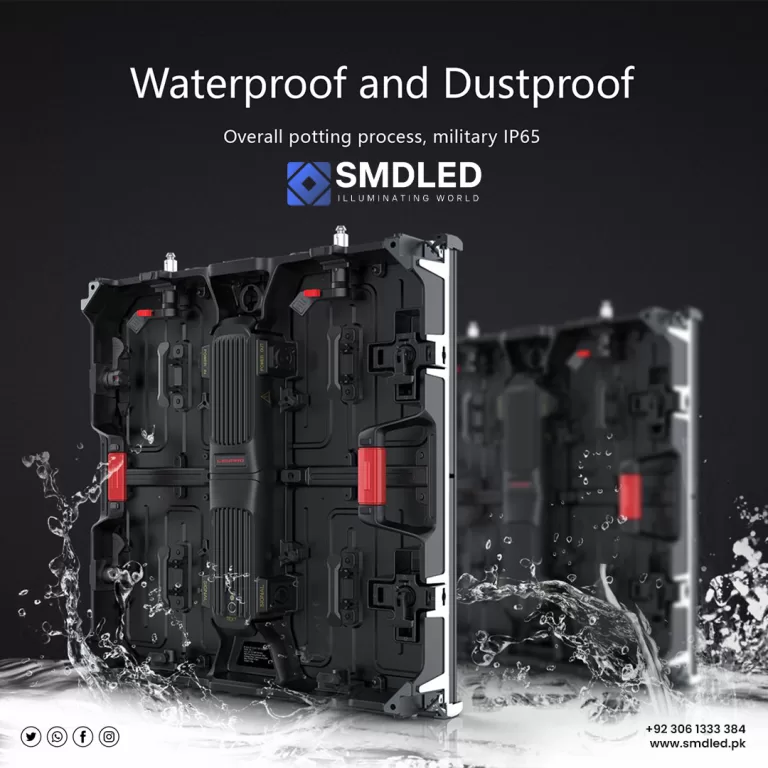
Ideas for creative projects using SMD LED modules, from home decor and art installations to event signage, with practical guidance…