 Outdoor SMD Screens
 Indoor SMD Screens
 Flexible SMD Screens

Understanding Pixel Density in SMD Screens: What You Need to Know
Pixel density in LED screens is set by the pixel pitch: the smaller the pitch, the more pixels per square…

“Smart technology” has changed how displays are used. SMD LED screens (direct-view LED displays built from Surface-Mount Device LED packages) are no longer just bright panels: many are now networked, managed from the cloud, scheduled, monitored remotely and connected to data feeds and sensors. This article explains what that means in practice, clears up a common confusion with phone and tablet screens, and gives practical advice on choosing and optimising a screen.

First, a clarification. Smartphones, tablets and smartwatches use LCD or OLED/AMOLED display panels. They contain many surface-mount components, but their displays are not SMD LED screens. SMD LED screens are the modular displays used for video walls, billboards, stages and signage. In these, each pixel is an LED package that produces its own light, with no backlight.
In the smart-technology era, SMD LED screens play a growing role as connected displays:

Efficiency: LEDs are efficient light sources, and smart control helps further through automatic dimming and scheduling. A large screen still uses significant power, so check average and maximum power figures on the datasheet.
Brightness: Outdoor models are designed for daylight, and indoor models for comfortable viewing at lower brightness.
Versatility: Because they are modular, SMD LED screens can be built in many sizes, from small indoor signs to large outdoor billboards, and curved or flexible formats are available within manufacturer limits.

1. Pixel pitch and size: Match the pixel pitch to the viewing distance, and plan the native resolution (size ÷ pitch) for your content.
2. Indoor or outdoor: Outdoor screens need higher brightness and IP ratings such as IP65; indoor screens offer finer pitches.
3. Control system: Check that the controller and media player support the smart features you need, such as cloud management, scheduling and monitoring.
4. Image quality: Look at refresh rate, grey scale and calibration, especially if the screen will be filmed.
5. Support: Ask about warranty, spare modules and after-sales service.

Q: What does SMD stand for?
A: Surface-Mount Device: a component mounted directly on the surface of a circuit board.
Q: Are phone and tablet screens SMD screens?
A: No. They use LCD or OLED panels. SMD LED screens are modular displays used for signage, video walls and billboards.
Q: How do SMD LED screens fit into smart technology?
A: Through networked control: cloud management, scheduling, remote monitoring, data feeds and sensors.
Q: Do SMD LED screens have a backlight?
A: No. Each LED package produces its own light. Backlights are used in LCD screens.
Q: Are SMD LED screens energy-efficient?
A: LEDs are efficient, but large screens still use significant power. Automatic dimming and scheduling help.
Q: Can SMD screens be used outdoors?
A: Yes, outdoor-rated models are designed for daylight and weather within the manufacturer’s limits.
Q: What are the limitations?
A: Fine-pitch screens cost more per square metre, screens need ventilation and maintenance, and smart features depend on the control system and a reliable network connection.
Q: What developments can we expect?
A: Finer pitches, better efficiency, more capable control systems and wider use of COB and microLED in fine-pitch displays.
In the era of smart technology, SMD LED screens are becoming connected, controllable displays that can be managed remotely, scheduled, monitored and linked to live data. Choosing the right pitch, environment rating and control system, and optimising brightness and content, helps get the best visibility and efficiency from them.
Contact Us For Free Consultation at 0306-1333384
Powered By BIA Communications
Choosing a screen? Compare indoor SMD screens and outdoor SMD screens, browse our SMD screen products, or ask for a free quote.
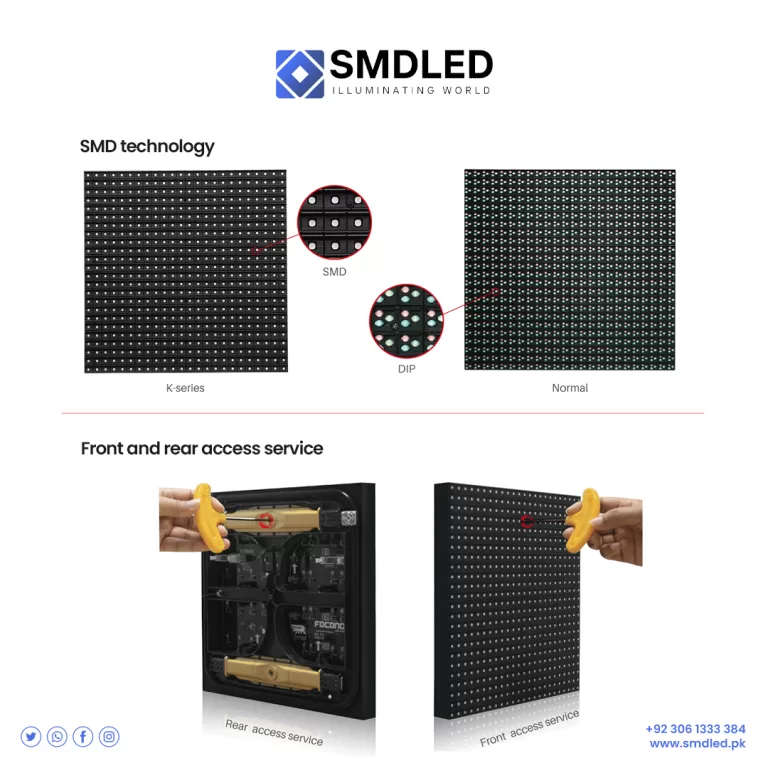
Pixel density in LED screens is set by the pixel pitch: the smaller the pitch, the more pixels per square…
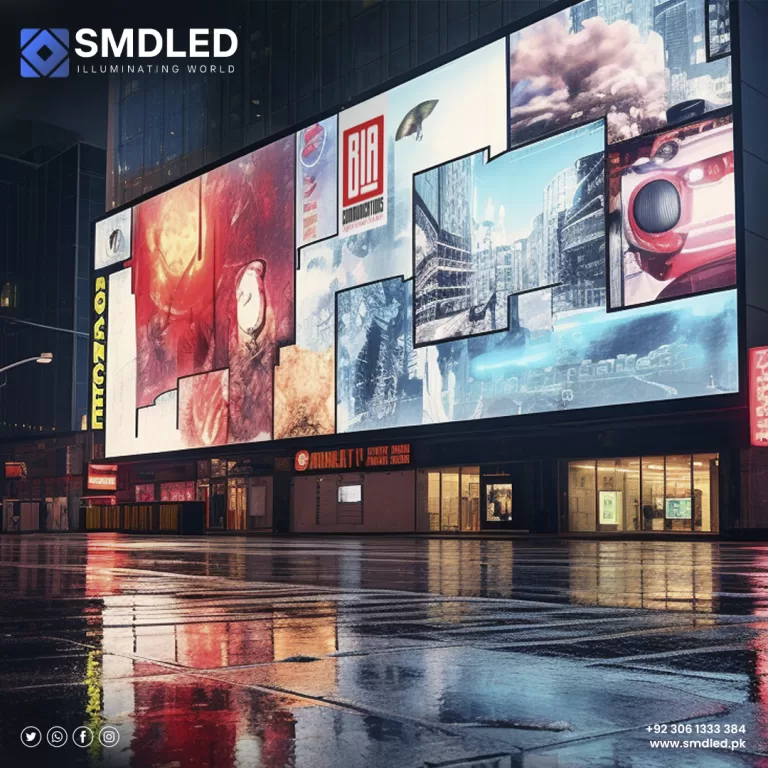
Outdoor SMD LED screens are popular for advertising because they can be bright enough for daylight and can show changing…

Where do SMD LED screens fit in vehicles? Dashboard and infotainment displays in cars are usually automotive-grade LCD or OLED…