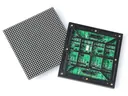
 Outdoor SMD Screens
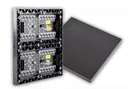 Indoor SMD Screens
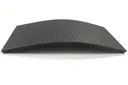 Flexible SMD Screens

Facial Recognition in Digital Advertising: Opportunities and Ethical Concerns
Camera-based audience analytics and facial recognition are discussed as ways to adapt digital ads, but they raise serious privacy, consent,…
The Next Big Thing in Display Marketing: Emerging Technologies to Watch
Display marketing keeps changing as new technologies appear. Some mainly affect online advertising (banners and video ads on websites, apps and connected TVs); others affect physical displays such as LED screens and digital billboards. This article looks at technologies worth watching, explains which kind of display marketing each applies to, and is realistic about their limits.
Online, ad platforms use AI to choose which ads to show to which users and to test creative variations. This can improve relevance compared with very broad targeting, but it is not perfect: predictions are estimates, data has gaps, and targeting based on personal data must follow privacy laws and platform rules. Claims that AI can read emotions or know what people need before they do should be treated with caution.
For physical screens, the practical uses of AI are different:
| Feature | Traditional Approach | AI-Assisted Approach |
|---|---|---|
| Targeting (online) | Broad demographics | Finer segments, within privacy rules |
| Content updates | Manual | Faster variations, reviewed by people |
| Relevance (screens) | One message all day | Content scheduled by time and place |
Augmented reality (AR) lets people see virtual products in their real surroundings, usually on a phone, for example trying on glasses or placing furniture in a room. Virtual reality (VR) offers fully virtual experiences through a headset. Both are used by some brands, but they require dedicated software and are not yet everyday tools for most businesses.
For businesses with LED screens, a practical link is to show a QR code that opens an AR experience on the viewer’s own phone, or to show AR content on a large screen at an event.
| Technology | Use Case | Potential Impact |
|---|---|---|
| AR | Virtual product testing | Can help customers visualise products |
| VR | Immersive brand storytelling | Can create memorable event experiences |
Online advertising uses energy in data centres and networks. Lighter ad files, efficient ad serving and hosting powered by renewable energy can reduce this, although the actual savings are hard to measure precisely.
For physical screens, sustainability is more tangible:
| Solution | Applies To |
|---|---|
| Lightweight ad files | Online ads |
| Renewable-powered hosting | Online ads |
| Efficient LEDs and dimming | Physical screens |
Programmatic advertising means buying ad space automatically through software. It is common online, is used for connected TV, and is available on some digital billboard networks. Key trends include greater use of first-party data (collected directly from customers with appropriate consent) and contextual advertising (placing ads based on the surrounding content rather than tracking individuals).
For a business that owns a single LED screen, programmatic buying is usually not relevant; it matters more to media owners with networks of screens and to advertisers buying space across many sites.
| Trend | Why It Matters |
|---|---|
| AI in ad platforms | Automates bidding and testing; results vary |
| Connected TV (CTV) | TV-style ads bought like online ads |
| First-party data | Less reliance on third-party tracking |
| Contextual advertising | Relevance without tracking individuals |
The Next Big Thing in Display Marketing: Emerging Technologies to Watch
Q1: What emerging technologies are likely to shape display marketing?
A: AI tools, AR, programmatic buying, contextual advertising and anamorphic “3D” content on LED screens are among the most discussed. How much each matters depends on whether you advertise online, on physical screens or both.
Q2: How is augmented reality used in display marketing?
A: Mainly through phones: virtual try-ons, 3D product views and interactive games. A physical screen can promote these with a QR code.
Q3: What role does artificial intelligence play?
A: It helps automate bidding and testing online, and helps create, schedule and analyse content for screens. It does not guarantee results and should be used with human review and within privacy rules.
Q4: Are 3D displays the next frontier for capturing attention?
A: Anamorphic “naked-eye 3D” content on corner or curved LED screens can be very eye-catching when viewed from the right position. It requires specially produced content and suitable screen geometry.
Q5: Could blockchain strengthen transparency in display marketing?
A: Blockchain has been proposed for recording ad transactions, but it cannot by itself verify that a real person saw an ad or eliminate fraud. Adoption is limited, and its practical benefits are still debated.
Emerging technologies will keep changing display marketing, especially online. For businesses using LED screens, the most useful developments are often practical: better content software, smarter scheduling, efficient hardware and simple links to phones through QR codes. Approach bold predictions with healthy scepticism, test what works for your audience, and focus on clear, relevant content.
Choosing a screen? Compare indoor SMD screens and outdoor SMD screens, browse our SMD screen products, or ask for a free quote.
Camera-based audience analytics and facial recognition are discussed as ways to adapt digital ads, but they raise serious privacy, consent,…
Gesture control lets people interact with displays without touching them. We look at the sensors and software involved, design and…
Digital billboards use significant electricity. This practical guide explains what drives their energy use, which measures genuinely reduce it (efficient…