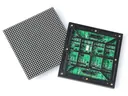
 Outdoor SMD Screens
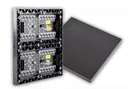 Indoor SMD Screens
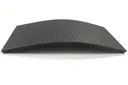 Flexible SMD Screens

Why Outdoor LED Screens Are Effective for Large-Scale Public Advertising
Imagine a brand launching a major campaign in the middle of a busy commercial district. Thousands of people pass through…
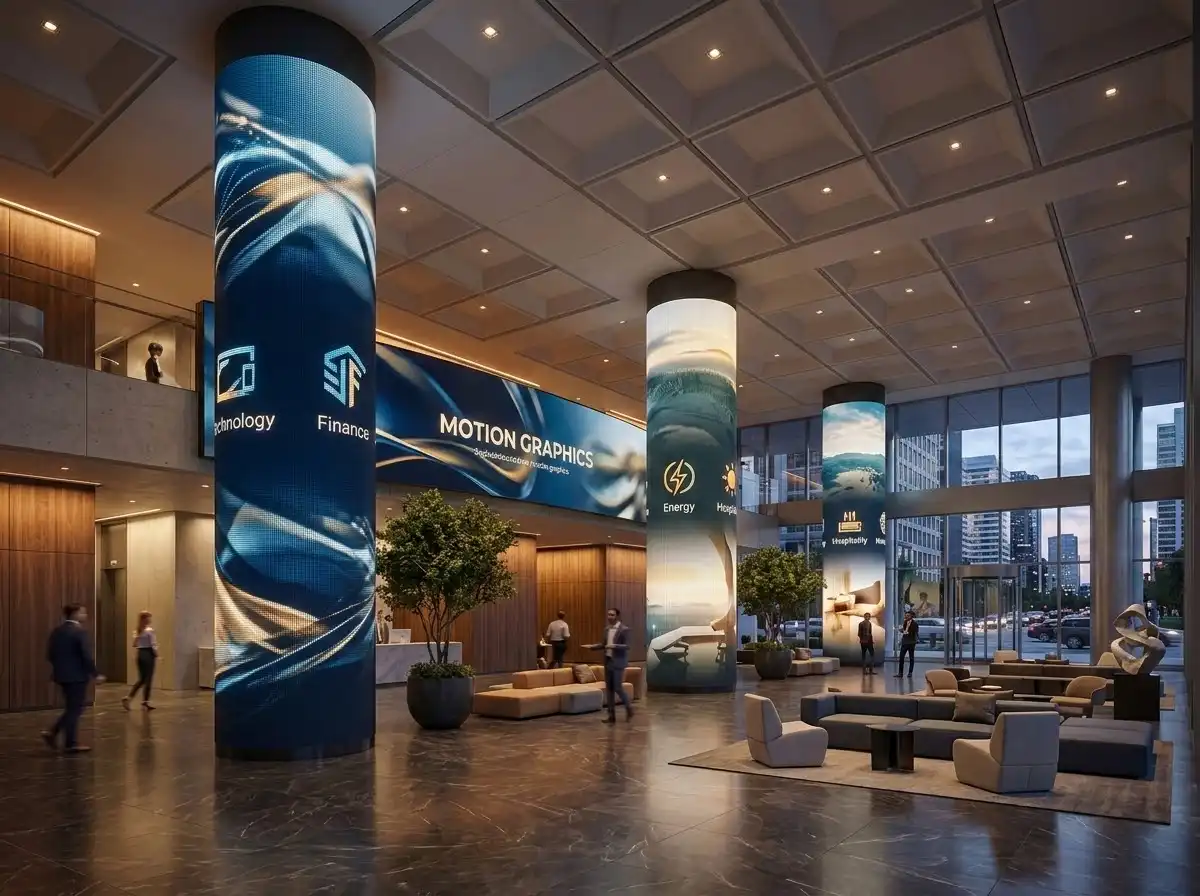
Standard flat monitors often fail to match the architectural curves found in modern commercial buildings. Rigid screens can restrict creative interior designs and limit how brands interact with visitors.
We help clients work around spatial design constraints with suitable visual hardware. Installing flexible SMD displays allows businesses to turn curved walls into digital canvases. These modules can be shaped around pillars and arches, within the manufacturer’s minimum bend radius, while keeping good image quality. Businesses across Pakistan can use these custom layouts to create memorable customer experiences.
Let us explore why flexible SMD displays are gaining popularity for immersive environment designs.
Traditional commercial display setups restricted visual content to flat rectangles on plaster walls. Architectural trends now favour organic curves, flowing wave ceilings, and cylindrical columns. Standard flat screens leave awkward gaps when mounted against non-linear surfaces.
We guide interior architects through moving from rigid displays to flexible hardware setups. Flexible display technology reduces visual breaks across curved architectural surfaces, creating a more continuous visual flow that helps hold visitors’ attention.
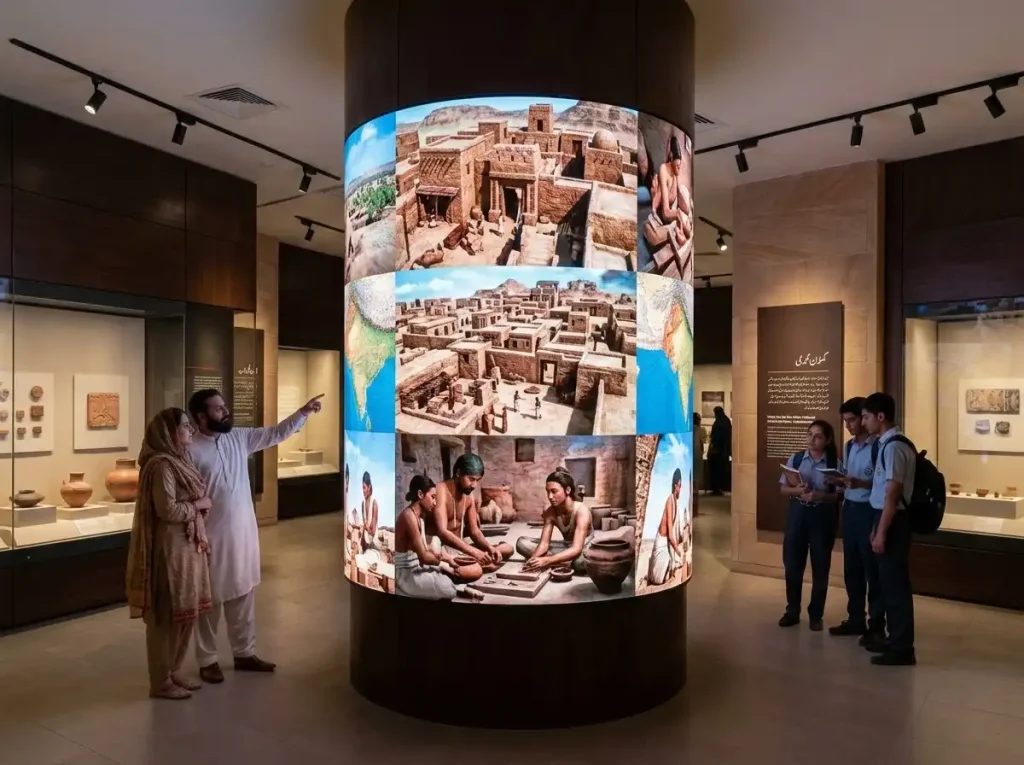
Shoppers see many flat marketing banners during daily errands, and repetitive rectangular graphics are easy to ignore. Unconventional visual formats can help a message stand out.
In high-end venues, flexible SMD displays are often mounted on convex columns and wavy feature walls. Moving graphics that follow natural walking paths can draw the eye along corridors.
Creative retail signage can make ordinary shopping trips more memorable, and environments with well-designed visual displays can encourage customers to stay longer.
Flexible SMD modules use flexible printed circuit boards and soft rubber or silicone housings. They are designed to be bent into shape during installation, within the rated minimum bend radius, and then held in that shape by a supporting frame. They are not intended to be flexed repeatedly once installed.
At SMD LED, we recommend calibrating panels before final mounting, which helps achieve more uniform brightness and colour across concave and convex joins.
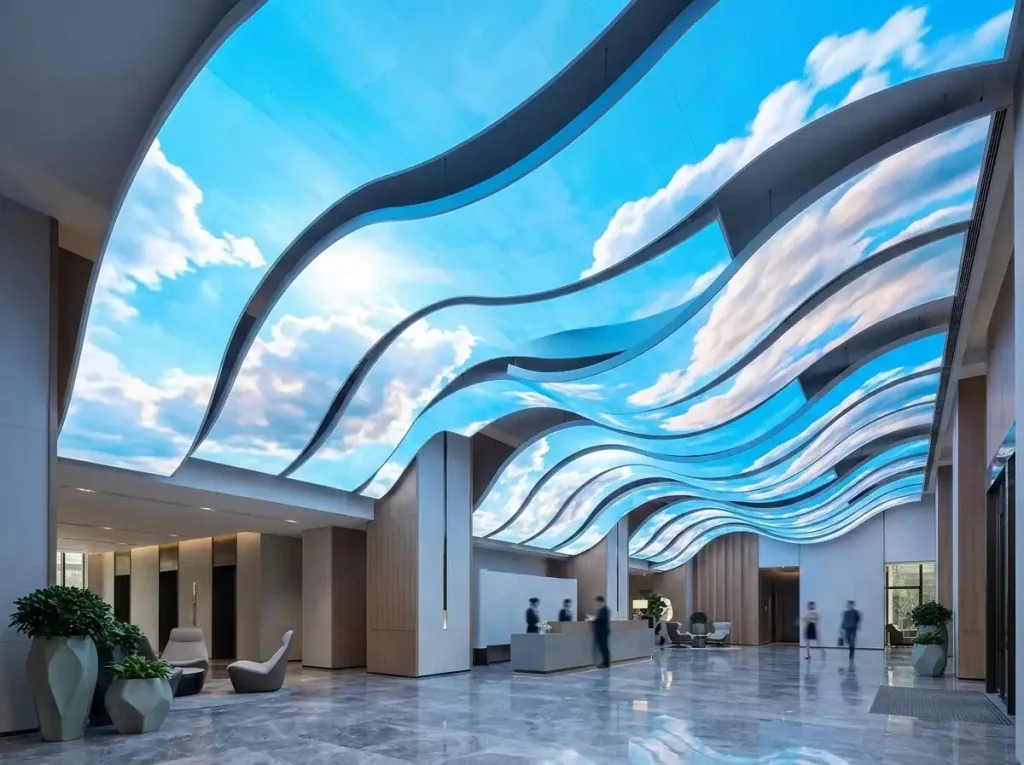
Interior designers can use soft LED modules to turn ordinary architectural elements into focal points. Versatile mounting options let creative teams think beyond simple wall hangings. Some ideas:
When planning these installations, designers may also integrate Indoor LED Screens into structural alcoves. A curved LED screen inside an entrance archway can create a strong sense of arrival. Overhead and wall-mounted installations need supporting structures designed by a qualified structural engineer, and electrical work carried out by a licensed electrician, following the manufacturer’s guidance.
Evaluating structural frames for flexible SMD displays supports reliable long-term operation, and proper planning helps prevent delays during complex installations.
Flexible SMD displays can turn standard interiors into engaging visual destinations, and custom curved layouts help brands differentiate their spaces. SMD LED supplies display solutions across Pakistan. Contact us to discuss your interior design concepts and installation requirements.
Often, yes, provided the column’s radius is within the module’s minimum bend radius. A custom support frame holds the modules in shape; with careful design and calibration, seams can be kept to a minimum.
Many flexible modules use rear magnets that attach to a metal sub-frame, so technicians can remove individual modules from the front with magnetic or suction tools. Always switch off and isolate power before servicing.
Standard videos can play, but content rendered to the screen’s exact pixel dimensions and shape usually looks much better. We recommend designing content around the physical layout of your display.
Lifespan depends on the model, operating hours, brightness, temperature and ventilation. Manufacturers usually quote LED life as the hours until brightness falls to a set level, so check the rated figure for the specific model. Good ventilation and regular dust cleaning help preserve brightness and colour uniformity.
Most flexible modules are designed for indoor environments. For exterior applications, we recommend outdoor-rated LED screens with suitable IP ratings, installed by qualified professionals.
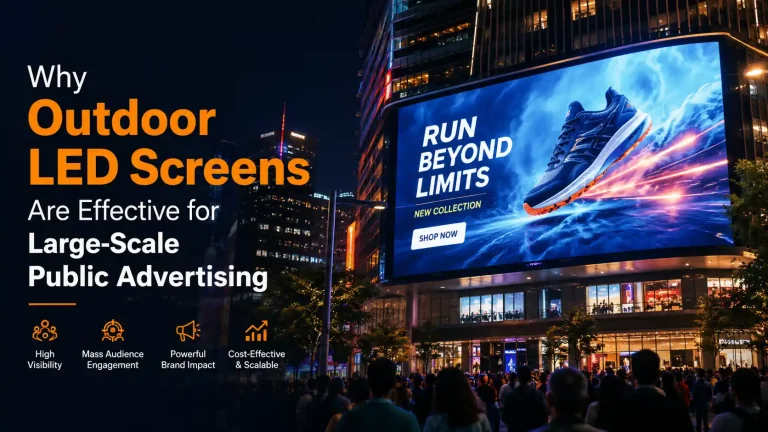
Imagine a brand launching a major campaign in the middle of a busy commercial district. Thousands of people pass through…
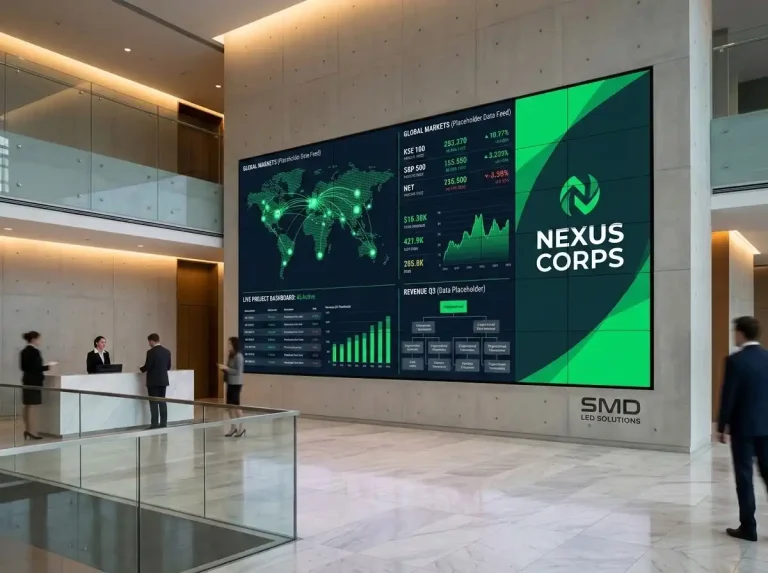
A digital advertising campaign has to do more than occupy space. It needs to deliver the right message, at the…
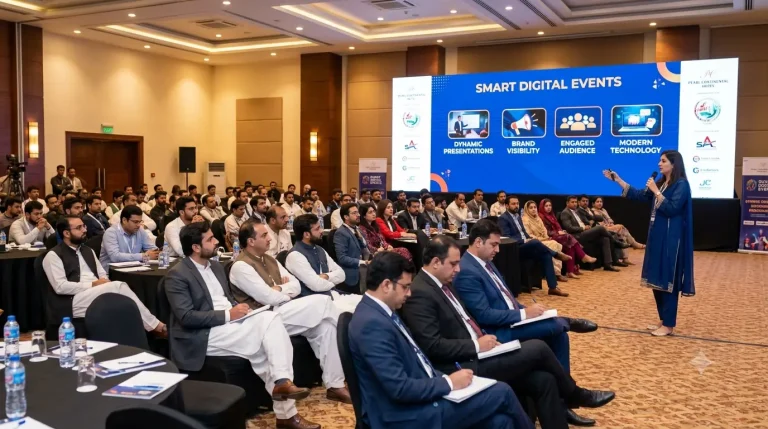
A speaker may deliver an excellent presentation, but if people sitting at the back cannot clearly see the content, much…