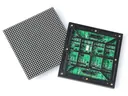
 Outdoor SMD Screens
 Indoor SMD Screens
 Flexible SMD Screens

P3.9 vs. P4.8: Which Rental SMD Screen Is Right for Your Event?
P3.9 vs. P4.8: Which Rental SMD Screen Is Right for Your Event? Screen quality affects how an audience experiences an…
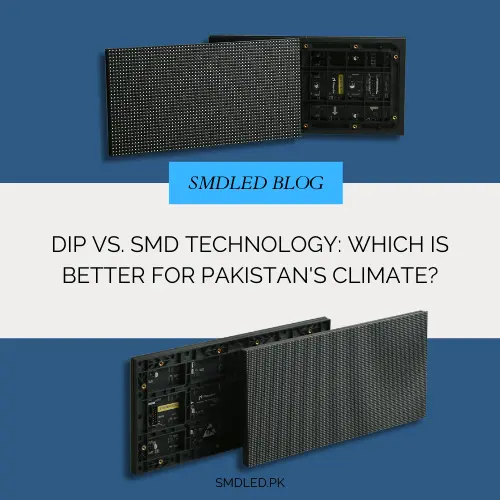
Choosing between DIP vs SMD technology is an important decision when investing in LED screens in Pakistan. High temperatures, dust, humidity, monsoon rain and strong sunlight all test outdoor screens.
This article compares the two LED packaging types on performance, durability, cost and reliability, with a focus on Pakistani conditions. Keep in mind that the quality of a specific product often matters as much as the packaging type, so always compare datasheets for matched models.
Both are ways of packaging and mounting LEDs on a display module.
DIP stands for Dual In-line Package. In DIP LED screens, the red, green and blue LEDs are separate packaged components whose leads pass through holes in the circuit board.
SMD stands for Surface-Mounted Device. In a typical full-colour SMD screen, each pixel is a single compact package containing separate red, green and blue LED dies (chips), soldered directly onto the surface of the circuit board.
This structural difference explains many of the practical differences between the two.
Brightness is a key factor for outdoor use.
• Traditionally known for high outdoor brightness
• Long used for large outdoor billboards
• Outdoor SMD products are available with high brightness ratings suited to daylight
• Adjustable brightness
• Good colour consistency
DIP was once the usual choice for bright outdoor screens, but outdoor SMD products have narrowed the gap. Compare the rated brightness of specific models, for example our BIA Outdoor SMD Screen Module.
Durability depends on the packaging, but also heavily on module potting or coating, cabinet sealing and installation.
• Physically robust LEDs
• Long track record outdoors
• Moisture protection depends on potting and cabinet sealing
• Compact packages that can be protected with potting or coatings on outdoor modules
• Moisture and heat performance depend on the module and cabinet design
Well-designed outdoor products of either type can perform reliably in dusty and humid conditions; check IP ratings and operating temperature ranges for the specific product.
• Often narrower viewing angles
• Colour can shift at side angles because colours come from separate LEDs
• Generally wide viewing angles (check the datasheet)
• More uniform colour, since the colour dies sit close together in one package
Where viewers approach from many angles, as in many urban sites, SMD usually has an advantage.
• Limited to larger pixel pitches, typically around P10 and above
• Available from fine indoor pitches to large outdoor pitches
• Suitable for high-resolution video walls
See our product range for available options.
Power use depends on the specific product, its brightness, LED efficiency and drive design rather than packaging type alone. Compare the average and maximum power figures on datasheets for products with the same pitch and brightness, and use automatic dimming to reduce energy use.
• Individual LEDs can sometimes be replaced by a technician
• Modules can also be swapped
• Faults are usually fixed by swapping modules, with component repair done by trained technicians
• Front-service designs can make access easier
Maintenance needs depend more on product quality, installation and climate than on packaging alone.
Costs depend on pitch, brightness, brand and quantity. Compare upfront quotes and expected running and maintenance costs for matched products, rather than assuming one type is always cheaper.
DIP is still used in
• Some very large highway billboards
• Long-distance signage
SMD is widely used in
• Urban billboards
• Commercial displays
• Events
• Indoor and outdoor video walls
Many new installations use SMD because of
• Fine-pitch options and image quality
• Wide viewing angles
• Availability of outdoor-rated products
Consider:
• Installation location and exposure
• Viewing distance
• Required brightness
• Power availability
• Maintenance arrangements
• Budget
For advice on your project, contact us, or follow our updates on Facebook.
For most applications, especially where viewers are closer or at different angles, SMD is the usual choice. For very long-distance outdoor screens, both can be considered; compare specific products.
DIP is still used for some outdoor screens, but SMD is now more common in new installations.
It depends on the specific products and brightness settings. Compare datasheet power figures for matched models.
SMD generally offers finer pitches, wider viewing angles and more even colour.
Yes, when you choose products designed and rated for outdoor use.
Understanding DIP and SMD helps you choose a screen that suits Pakistan’s climate. For most modern applications SMD is a strong choice, but always compare the specifications of real products.
Visit our website, browse our products, or contact us for a consultation.

P3.9 vs. P4.8: Which Rental SMD Screen Is Right for Your Event? Screen quality affects how an audience experiences an…

Indoor vs Outdoor SMD Screens: 5 Key Differences Choosing between indoor vs outdoor SMD screens is one of the first…

What Is the Best Pixel Pitch for an Outdoor Screen in Pakistan? Selecting the best pixel pitch for outdoor screen…