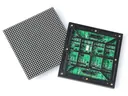
 Outdoor SMD Screens
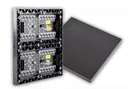 Indoor SMD Screens
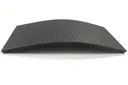 Flexible SMD Screens

What Will Display Marketing Look Like in 2030? Predictions from 2025
Informed speculation about display marketing in 2030: likely directions for AI, AR, privacy, sustainability and physical screens, and which bold…
Note: The brand in this article is a hypothetical example used to explain how programmatic advertising works. It is not a real SMDLED client, and no real campaign results are reported.
In a crowded marketplace where attention is valuable and relevance matters, brands face a constant challenge: how to reach the right audience, at the right time, at a sensible cost. Programmatic advertising is one way to approach this. Below, we walk through how an imaginary brand might use it, both for online ads and for programmatic digital out-of-home (DOOH) on LED screens, and what businesses can learn from the approach.
Programmatic advertising uses software and data to buy and place ads automatically, so messages can be matched more closely to audiences and moments. By studying audience behaviour and preferences, a brand can shape its campaign strategy. Automated placement can improve efficiency and relevance and help reduce wasted spend, although results depend heavily on data quality, creative and budget.
In our hypothetical example, the brand feeds data points such as location, time of day, device type and (for screens) audience patterns at each site into its campaign decisions. Rather than reporting invented numbers, the table below shows what such a brand would measure before and after the change:
| Metric | What to measure | Why it matters |
|---|---|---|
| Click-Through Rate (CTR) | Clicks divided by impressions (online ads) | Shows whether the message is relevant |
| Cost-Per-Acquisition (CPA) | Total spend divided by customers acquired | Shows efficiency of spend |
| Return on Investment (ROI) | Attributable profit compared with total campaign cost | Shows whether the campaign paid off |
Reaching different audience segments requires planning. With programmatic tools, a brand can group its audience by behaviour, preferences and purchase intent, and adjust creative for each group. For example, younger urban audiences might see fast-paced, vibrant ads, while families might see messages focused on practical benefits. On LED screens, the same idea can apply by time of day or location, for instance different content at a mall in the evening than at a business district in the morning.
Online, the brand might use real-time bidding to buy impressions where and when its segments are active. A simple segmentation framework could look like this:
| Segment | Key Preferences | Creative Theme |
|---|---|---|
| Young Urban Audiences | Speed, Trendy Visuals | Vibrant & Minimalistic |
| Families | Practicality, Family-Oriented | Warm & Informative |
| Tech Enthusiasts | Innovation, High-Tech Features | Sleek & Futuristic |
Matching visuals to audience preferences can help both conversions and longer-term brand recognition.
Performance dashboards let a marketing team see which channels, placements and segments are working and shift budget accordingly. Online metrics such as CTR, viewability and conversion rate are tracked closely; for LED screens, useful measures include play logs (proof of play), estimated audience at each site, and any linked actions such as QR-code scans or promo-code use.
Typical adjustments a brand might make during a campaign include:
| Metric | Online ads | LED screens (DOOH) |
|---|---|---|
| Delivery | Impressions, viewability | Proof-of-play logs |
| Engagement | Clicks, CTR | QR scans, promo-code use |
| Outcome | Conversion rate | Store visits or sales during the campaign, compared with a baseline |
Aligning ad placement with consumer behaviour is central to effective campaigns. Programmatic buying automates much of the process, so teams can spend more time on the message itself. With real-time bidding (RTB), brands can adjust bids and targeting as conditions change.
A hypothetical brand could test several placement strategies and compare them using the measures each one supports:
| Ad Placement Strategy | How to evaluate it |
|---|---|
| In-app Programmatic Banners | CTR and cost per acquisition |
| Video Pre-Roll within Niche Content | View-through rate and engagement |
| Scheduled Content on LED Screens | Proof of play, QR scans and sales against a baseline period |
Q1: What is programmatic advertising, and why do brands use it?
A1: Programmatic advertising is the automated buying and selling of ads using data-driven technology. Brands use it to deliver more relevant messages to specific audiences and to manage spend more efficiently.
Q2: How would a brand identify its target audience?
A2: By analysing data such as demographics, browsing behaviour and purchase patterns to build audience personas, then using programmatic tools to reach those segments. For LED screens, location and time-of-day data play a similar role.
Q3: What role does creativity play?
A3: A big one. Testing different formats, messages and visuals, then keeping the combinations that perform best, is often what separates strong campaigns from average ones.
Q4: How does automation help ROI?
A4: Automation makes it easier to move budget toward better-performing placements and away from weaker ones, which can reduce wasted spend. It does not guarantee a return; results depend on the product, audience, creative and measurement.
Q5: What is the biggest challenge?
A5: Usually complexity: understanding the platforms, setting up reliable measurement and avoiding over-reliance on automated decisions. Working with experienced specialists and reviewing results regularly helps.
This hypothetical example shows how programmatic advertising can help a brand use data, automation and tailored creative to make better use of its budget. Programmatic is not a one-size-fits-all solution, and it needs clear goals and honest measurement. Used with purpose, across online channels and digital screens alike, it can help brands reach people at the right moment with the right message.
Choosing a screen? Compare indoor SMD screens and outdoor SMD screens, browse our SMD screen products, or ask for a free quote.
Informed speculation about display marketing in 2030: likely directions for AI, AR, privacy, sustainability and physical screens, and which bold…
Projection mapping turns buildings and objects into temporary screens for events and campaigns. This guide explains how it works, where…
Digital signage can help hospitals and clinics share wayfinding, queue information, announcements and approved health education. This article covers practical…