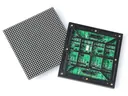
 Outdoor SMD Screens
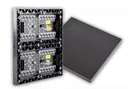 Indoor SMD Screens
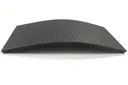 Flexible SMD Screens

How to Use Digital Billboards for Public Service Announcements
How organisations can use digital billboards for public service announcements: clear messages, sensible placement, updates coordinated with the responsible authorities,…
In a world where attention spans are short, outdoor advertisers are looking for more flexible ways to reach people. Outdoor advertising, long dominated by static billboards and posters, is increasingly using digital displays built with SMD (Surface Mount Device) LED technology. These bright, modular screens let advertisers change content quickly and run several campaigns on one site. This article looks at how SMD screens are being used in outdoor advertising and what to consider when planning one.
SMD stands for Surface Mount Device. In an SMD LED screen, each small LED package usually contains red, green and blue LED chips and is soldered directly onto the module’s circuit board. SMD is therefore one way of packaging LEDs, not an alternative to LED: an SMD screen is an LED screen. Other packaging types include DIP (through-hole) and COB (chip-on-board).
Outdoor SMD screens are designed for high brightness and are sealed to a rated IP level, so they can be read in daylight and installed outdoors when mounted correctly. Many controllers support automatic brightness adjustment using a light sensor or schedule. Typical features include:
The features that matter depend on how a screen is specified, not only on its LED package. Here is what to check:
| Feature | What to check |
|---|---|
| Brightness control | Whether the controller supports a light sensor or scheduled brightness |
| Weather protection | The IP rating of the modules and cabinet, and the installation method |
| Power consumption | Average and maximum power figures on the product datasheet |
Unlike static billboards, digital screens let campaigns be changed without printing and replacing posters. Advertisers can rotate several messages, schedule content by time of day, and update campaigns for events or promotions, subject to the screen operator’s procedures and local advertising rules.
| Feature | Impact |
|---|---|
| Remote Updates | Campaigns can be changed without printing new posters. |
| Suitable Resolution | Pixel pitch chosen for the viewing distance keeps content clear. |
| Brightness Control | Can lower power use at night while keeping content readable. |
Choosing the right pixel pitch for the viewing distance, and enough brightness for the site, helps outdoor screens show clear images in daylight and at night. Advertisers can use animation and video where local rules allow; near roads, simple, legible content is safer and avoids distracting drivers. QR codes are only practical on screens that pedestrians can stop and look at.
Lifespan and maintenance depend on product quality, installation, operating conditions and servicing. Modular designs mean individual modules, power supplies or cards can usually be replaced. Points to consider:
| Feature | Impact |
|---|---|
| Brightness | Readability in daylight; reduce at night |
| Pixel Pitch | Sharper detail at closer viewing distances |
| Power Settings | Affect running costs and heat |
Outdoor screens use significant power, especially at high daytime brightness, so energy management matters. Efficient LED packages, power supplies and driver ICs, together with sensible brightness settings, can reduce consumption. Ask suppliers about recyclable materials and take-back or repair options for the specific product.
Practical steps that can improve sustainability include:
| Feature | Impact |
|---|---|
| Adaptive Brightness | Can reduce energy use; savings depend on site and settings |
| Modular Repair | Fewer whole-screen replacements |
| Scheduled Operation | No power used when the screen is off |
SMD stands for Surface Mount Device. SMD screens are LED screens built with small LED packages, each usually containing red, green and blue chips, soldered onto circuit boards. Outdoor models are designed for high brightness so they can be read in daylight, and they let advertisers show changing content that static billboards cannot.
Digital screens let advertisers use animation and video, schedule content and update campaigns quickly. Some setups can change content based on data such as time or weather, but that requires additional software and integration. Near roads, keep content simple and follow local rules.
Outdoor screens use significant electricity, but brightness control, efficient components, sensible operating hours and modular repair can reduce their impact. Some sites use solar power, but this needs proper electrical design and is not standard.
Digital screens are becoming more common in commercial areas, sometimes showing public information alongside advertising where an authority arranges this. Light spill, brightness and visual clutter are real concerns, so screens should be dimmed at night and placed in line with local rules.
Smaller screens, such as shop-front displays, are an option for small and medium-sized businesses, and some businesses buy airtime on existing screens instead of owning one. Contact us to discuss what suits your site.
SMD LED screens give outdoor advertisers flexible, bright displays whose content can be changed quickly. The results depend on choosing the right pixel pitch and brightness for the site, installing the screen safely, following local rules and managing energy use. Planned carefully, a digital screen can be an effective part of an outdoor advertising mix.
Choosing a screen? Compare indoor SMD screens and outdoor SMD screens, browse our SMD screen products, or ask for a free quote.
How organisations can use digital billboards for public service announcements: clear messages, sensible placement, updates coordinated with the responsible authorities,…
Micro LED and OLED are both self-emissive display technologies with different strengths. This guide compares brightness, contrast, lifespan, energy use,…
Voice-activated digital signage lets people ask a screen for information instead of tapping menus. This guide covers realistic uses, accuracy…