 Outdoor SMD Screens
 Indoor SMD Screens
 Flexible SMD Screens

Top Features to Consider When Choosing an SMD Screen for Your Business
Top Features to Consider When Choosing SMD Screens for Your Business Introduction Digital displays are now a common tool for…
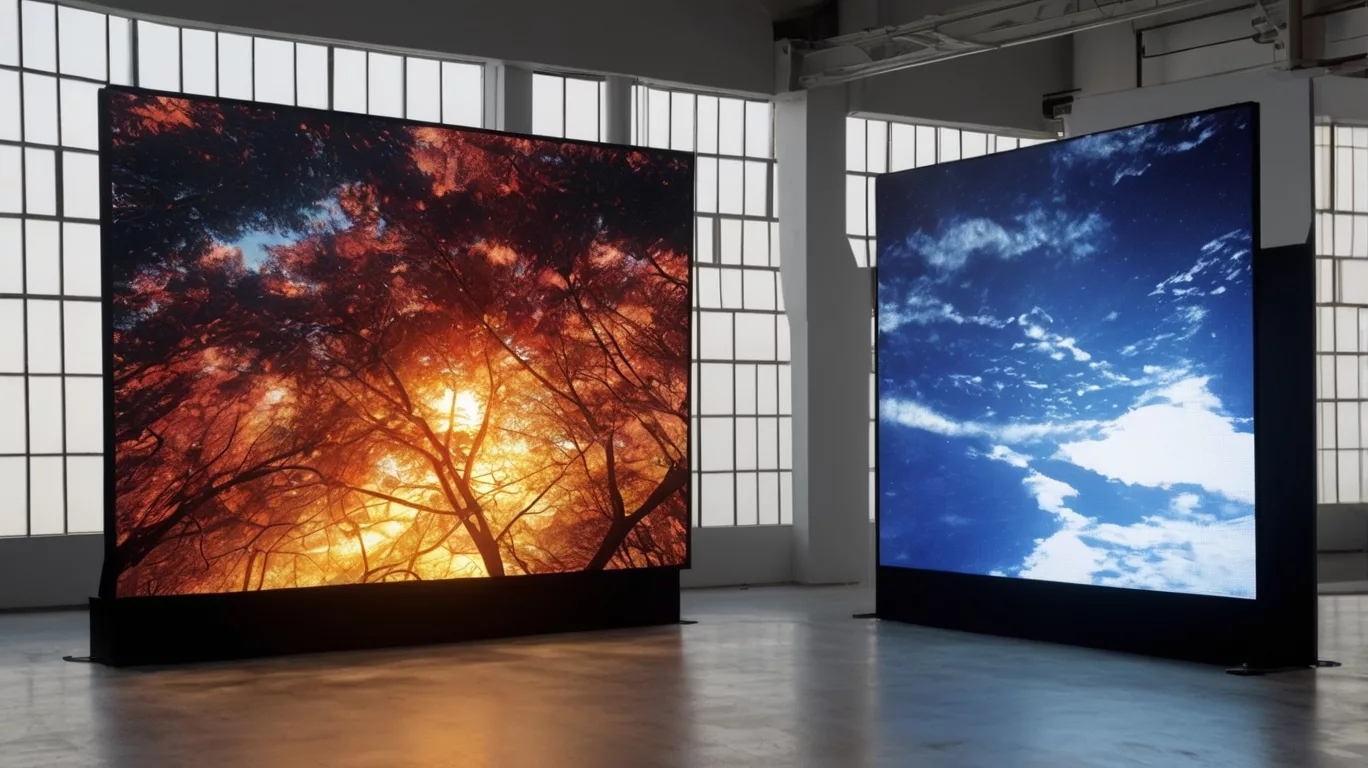
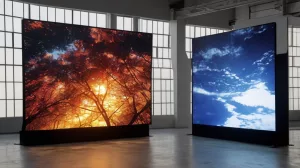
LED screens are used everywhere from advertising to events. Two LED packaging types have been widely used in LED screens: SMD and DIP. In this article, we compare SMD vs DIP screens, explain the strengths of each, and show why the right choice depends on the specific models and your application.
LED stands for Light-Emitting Diode: a semiconductor that emits light when current passes through it. In a direct-view LED screen, each pixel is made of red, green and blue LEDs that produce light directly, with no backlight. LED screens range from small indoor signs to large outdoor billboards.
DIP (Dual In-line Package) LEDs have wire legs that pass through holes in the circuit board. In a DIP screen, each pixel is usually made of separate red, green and blue LED lamps grouped together.
DIP was the common choice for early outdoor LED displays, valued for high brightness and robust construction.
DIP screens create colour by mixing light from the separate red, green and blue LEDs. Because the LEDs are separate, colour mixing up close and viewing angles are generally more limited than with SMD, and fine pixel pitches are harder to achieve.
SMD (Surface-Mount Device) LED screens use LED packages soldered onto the surface of the board. In a typical SMD screen, each package contains red, green and blue chips together.
SMD packaging allowed smaller pixels and smoother images than DIP. It is now standard for indoor screens and is also widely used outdoors in models designed for outdoor use.
Because the three colours sit in one small package, pixels can be placed closer together. This allows finer pixel pitches, smoother colour mixing and wider viewing angles.
When comparing SMD vs DIP screens, the typical differences are:
With all three colours in one package, SMD screens usually mix colour more smoothly, especially at closer viewing distances.
SMD screens typically keep a more consistent image when viewed from the side, which helps where the audience is spread out.
SMD makes fine-pitch indoor screens and many slim cabinet designs possible. Weight depends on the cabinet design and materials, not just the LED type.
DIP screens are still chosen for some applications:
SMD is the standard for indoor LED screens. Fine pixel pitches give sharp images at close range, which suits retail, corporate and indoor advertising.
For indoor and close-viewing screens, SMD is the usual choice. For outdoor screens, both SMD and DIP models are available; outdoor SMD screens are widely used and are what we supply for most outdoor projects. Compare specific models on brightness, IP rating, operating temperature, viewing angle and pixel pitch rather than relying on the LED type alone. See also our guide to DIP vs SMD for Pakistan’s climate.
SMD screens give businesses flexible design options for conferences, storefronts and outdoor advertising. Power use depends on size, brightness and the specific model; check datasheet figures rather than assuming one LED type is always more efficient.
Cost depends far more on pixel pitch, size, brightness and build quality than on LED type alone. A fine-pitch SMD screen costs more than a coarse-pitch screen of the same size because it has many more pixels. Ask for quotations on comparable specifications and include running and maintenance costs.
SMDLED supplies SMD LED screens for indoor and outdoor use in Pakistan. You can explore our range of products here and learn about our own brand, BIA SMD.
For indoor and close-viewing screens, SMD is the clear choice. For outdoor screens, well-specified outdoor SMD models are widely used, and DIP remains an option for some coarse-pitch projects. Compare specific models for your site.
Both SMD and DIP screens have their place. SMD’s finer pitches, smoother colour and wider viewing angles make it the most common choice today, indoors and in many outdoor projects. Whatever you choose, base the decision on datasheets, site conditions and support, not the LED package alone.
Which is better for outdoor displays: SMD or DIP?
Both can work outdoors when the model is designed for it. Outdoor SMD screens are widely used; compare brightness, IP rating, operating temperature and viewing angle on the datasheets.
What makes SMD screens popular for indoor displays?
Finer pixel pitches, smoother colour mixing and wider viewing angles, which suit close viewing.
Are SMD screens more expensive than DIP?
It depends on pitch, size, brightness and build quality. Compare quotations for comparable specifications.
How does pixel pitch affect screen quality in SMD and DIP?
A smaller pixel pitch gives more pixels per square metre and a sharper image at close range. SMD allows much finer pitches than DIP.
What industries benefit most from SMD LED screens?
Retail, corporate, advertising, events and venues commonly use SMD LED screens.
Choosing a screen? Start with pixel pitch explained, compare indoor and outdoor screens, or browse our SMD screen products.

Top Features to Consider When Choosing SMD Screens for Your Business Introduction Digital displays are now a common tool for…
Storefront SMD Screens: What Retailers Should Know In a competitive retail environment, catching the attention of potential customers matters. One…

The Benefits of Using SMD Screens for Events and Concerts Introduction In the event industry, a strong visual experience helps…