
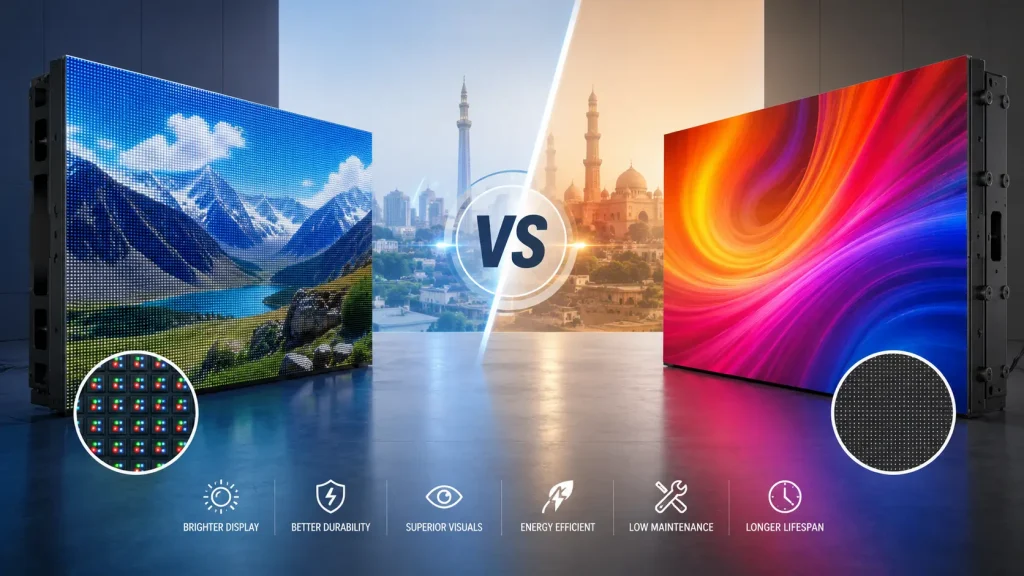
Selecting the ideal commercial display architecture directly impacts your brand visibility and viewer engagement. When comparing SMD LEDs vs COB LEDs, corporate buyers must evaluate how chip design alters visual delivery. Whether deploying high-impact video walls or upgrading architectural lighting fixtures, understanding underlying structural differences ensures your display investment yields maximum performance, long-term durability, and optimal energy efficiency.
Core Structural Differences: SMD LEDs vs COB LEDs
The fundamental variation lies in chip packaging and diode density. Surface-mounted diode variants house individual components in separate enclosures, allowing flexible configurations for complex commercial projects. Chip-on-Board configurations bind multiple bare diodes directly to a substrate, creating a unified, seamless light source. Most businesses don’t realize this distinction dictates critical factors like heat dissipation, viewing angles, and long-term maintenance logistics.
Comparison Table Here
| Factor | SMD LEDs | COB LEDs |
| Brightness | High | Very High |
| Heat Dissipation | Good | Better |
| Repairability | Easier | Harder |
| Viewing Angle | Wide | Moderate |
| Commercial Signage | Excellent | Less Common |
| Cost | Moderate | Higher |
| Best For | Video walls, signage | Specialized lighting |
Choosing Indoor LED Screens for Retail Applications
Commercial interior spaces demand exceptional image resolution and close-up clarity to effectively capture passing consumer attention. Advanced indoor LED screens utilize surface-mount technology to provide distinct pixel control and precise color calibration. This level of granular performance makes them the ideal choice for shopping mall directory boards, corporate lobbies, and dynamic retail signage installations where viewers stand mere feet away.
Maximizing Impact with Outdoor Digital Signage Solutions
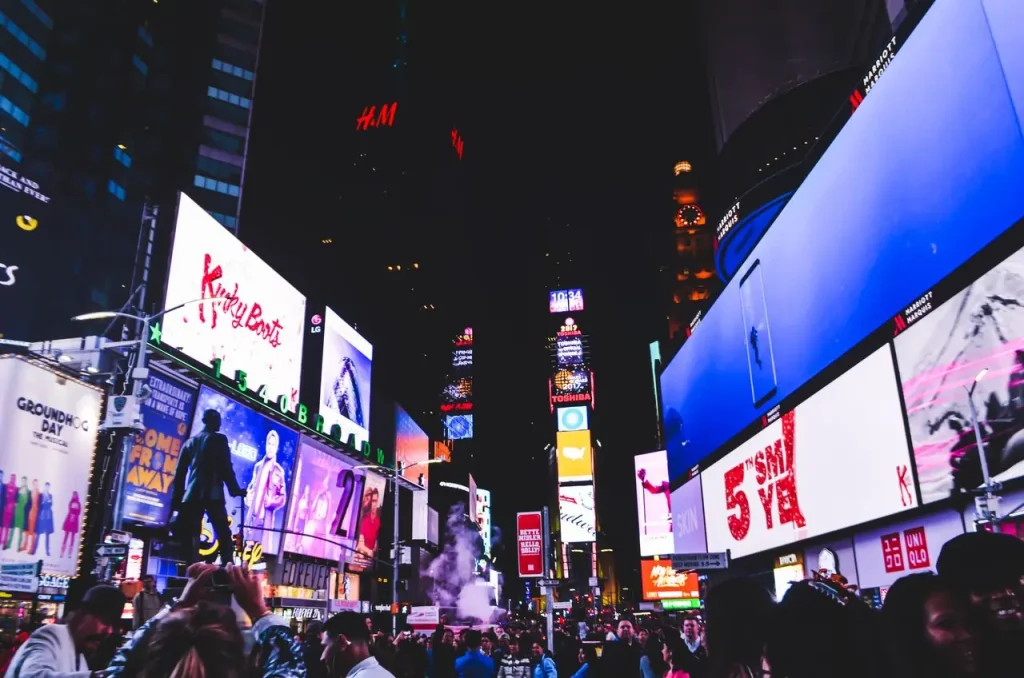
External promotional environments present challenging viewing conditions, requiring high-intensity brightness levels to combat harsh daytime glare. Deploying reliable digital signage solutions engineered with robust protective casing protects fragile components from dust and moisture infiltration. Modern outdoor display networks rely on specialized diode placement to preserve wide viewing angles, maintaining crisp image definition across long-distance thoroughfares.
Technical Analysis of Pixel Pitch and Nits Performance
Visual performance hinges on selecting appropriate technical specifications for your specific venue footprint. Pixel pitch dictates the distance between individual diodes, directly influencing minimum viewing thresholds and overall resolution sharpness. Display brightness, measured in nits, must match ambient environmental lighting. While interior displays perform flawlessly at lower nit levels, soaring highway billboards require heavy-duty lumen output to remain legible.
Seamless Integration of Professional Display Hardware
Implementing large-scale visual setups involves complex structural alignment and intricate electrical routing. SMD LED delivers comprehensive architectural planning and precise calibration services to ensure flawless operational deployment. Our engineering teams carefully configure heat ventilation paths and signal distribution loops during setup. This meticulous technical execution preserves stable panel functionality and safeguards against premature system failure or pixel degradation.
Consult with SMD LED for Optimized Commercial Displays
Navigating complex display specifications requires specialized industry insights to avoid costly installation errors. SMD LED engineers custom structural setups tailored to the unique operational demands of your business infrastructure. Our technical specialists evaluate your installation site, ideal viewing distances, and environmental challenges to maximize your marketing impact. Contact our consulting team today to request an accurate project estimate for premium SMD LEDs vs COB LEDs.