 Outdoor SMD Screens
 Indoor SMD Screens
 Flexible SMD Screens

SMD vs COB LEDs: Which Is Better for Your LED Display?
“SMD” and “COB” appear in two different markets: LED lighting (lamps, downlights, strips) and direct-view LED display screens. The terms…
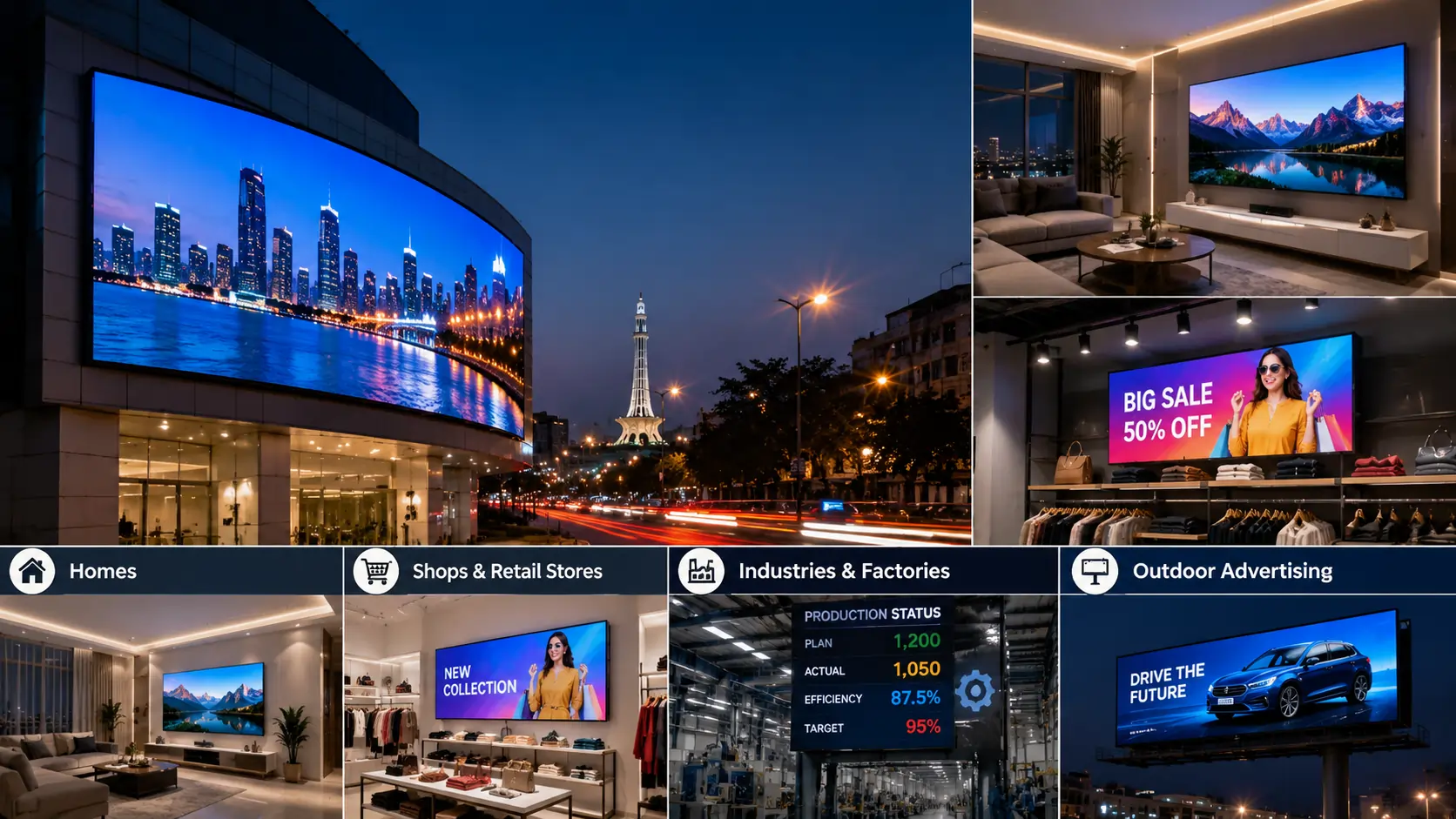
“SMD LED” can mean two different things. SMD (Surface-Mount Device) LEDs are small LED packages soldered onto a circuit board. They are used in lighting, such as bulbs, panels and strip lights, and also as the pixels of LED display screens, such as video walls and billboards. This article covers both uses of SMD LEDs in Pakistan for homes, shops and industries, and keeps them clearly separate. SMDLED.pk specialises in LED display screens.
In homes, SMD LEDs are used in bulbs, ceiling panels, downlights and cove or strip lighting. LED lighting generally uses less electricity than incandescent bulbs for the same light output, and good-quality products last longer. Actual savings and lifespan depend on the product quality, driver, heat and how many hours the lights run. Any wiring work should be done by a qualified electrician.
Shops use SMD LEDs in a different way: as the pixels of digital signage and video walls. Indoor LED screens can show promotions and product videos, and content can be updated quickly. A well-placed screen with good content can help a shop stand out and may attract more attention, though results depend on the location, content and products.
Industrial sites use SMD LEDs in two ways. For illumination, high-bay lights and floodlights light up warehouses and yards; these are lighting products chosen for light output, beam and protection rating. For information, weather-rated outdoor LED screens can show production figures, notices or safety messages in large facilities. Outdoor screens are designed to stay readable in sunlight within the manufacturer’s limits. Information screens supplement, and must not replace, required safety signage and alarm systems.

For LED display screens (not lighting), choose the pixel pitch according to viewing distance: finer pitches for close indoor viewing, coarser pitches for screens seen from further away. Outdoor screens also need higher brightness (measured in nits) and a suitable IP rating to stay readable and protected outdoors.
Display projects need careful planning. SMD LED can help with screen selection, configuration and setup, and installation should involve qualified structural engineers and electricians where required. Good ventilation, correct power supply and regular maintenance help screens run reliably, although no installation can rule out faults entirely.
Once you know you need a display screen rather than lighting, the next step is choosing the right type of screen. The table below gives a general starting point. The final choice always depends on the site, the viewing distance and the content you plan to show.
| Application | Typical screen type | Main considerations |
|---|---|---|
| Shop interior, showroom, reception | Indoor screen, fine pitch | Close viewing, moderate brightness, clean installation |
| Shop front, building facade, roadside | Outdoor screen, coarser pitch | Sunlight readability, weather protection, structure |
| Curved walls, columns, creative displays | Flexible screen | Shape of the surface, mounting frame, access for service |
| Factory floor, warehouse notices | Indoor or semi-outdoor screen | Dust, heat, readability from a distance |
You can compare the options on our indoor SMD screens, outdoor SMD screens and flexible SMD screens pages.
A practical rule of thumb is that the minimum comfortable viewing distance in metres is roughly equal to the pixel pitch in millimetres. A P2.5 screen looks smooth from about 2.5 metres and beyond, while a P10 screen is better suited to viewers 10 metres or more away.
A finer pitch than you need adds more pixels than viewers can notice. A pitch that is too coarse looks grainy to people standing close.
Indoor screens typically run at around 600–1,000 nits, which is enough for lit interiors without causing glare. Outdoor screens usually need around 4,500–6,500 nits to stay readable in direct sun, especially in the long summer months. Automatic brightness adjustment helps lower the level at night, which also reduces power use and glare for drivers.
For outdoor use, ask for an IP65 front rating at minimum so dust and rain do not get into the modules. Heat, fine dust and monsoon rain are the main challenges in most Pakistani cities, so the cabinet design, ventilation and sealing matter as much as the LEDs themselves.
Our services cover site assessment, installation and support, so these questions can be worked through with you before any equipment is ordered.
SMD LED supplies LED display systems for businesses, retail spaces and industrial sites in Pakistan. Contact us to discuss your project and request a quote.
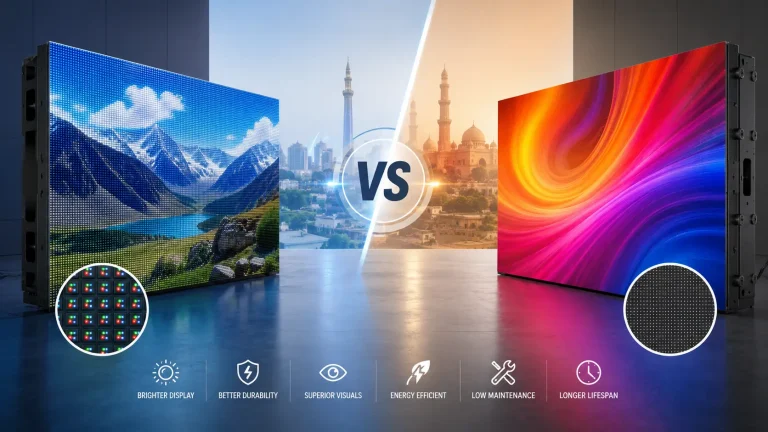
“SMD” and “COB” appear in two different markets: LED lighting (lamps, downlights, strips) and direct-view LED display screens. The terms…
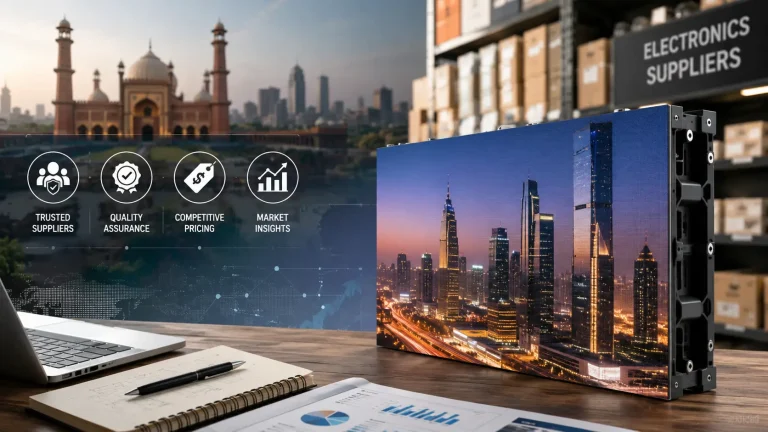
“SMD LEDs” can mean individual LED components (used in lighting and electronics) or finished LED display screens built from them.…
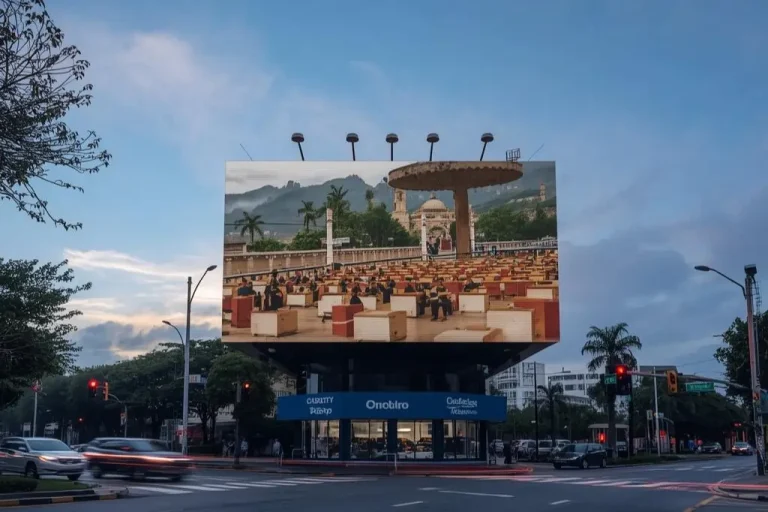
People passing through a busy commercial area see dozens of billboards every day, and many fade into the background. A…