 Outdoor SMD Screens
 Indoor SMD Screens
 Flexible SMD Screens

Interactive SMD Screens: Engaging Customers with Touch Technology
How touch-enabled LED displays can engage customers in shops, offices and museums, what hardware and software an interactive SMD screen…
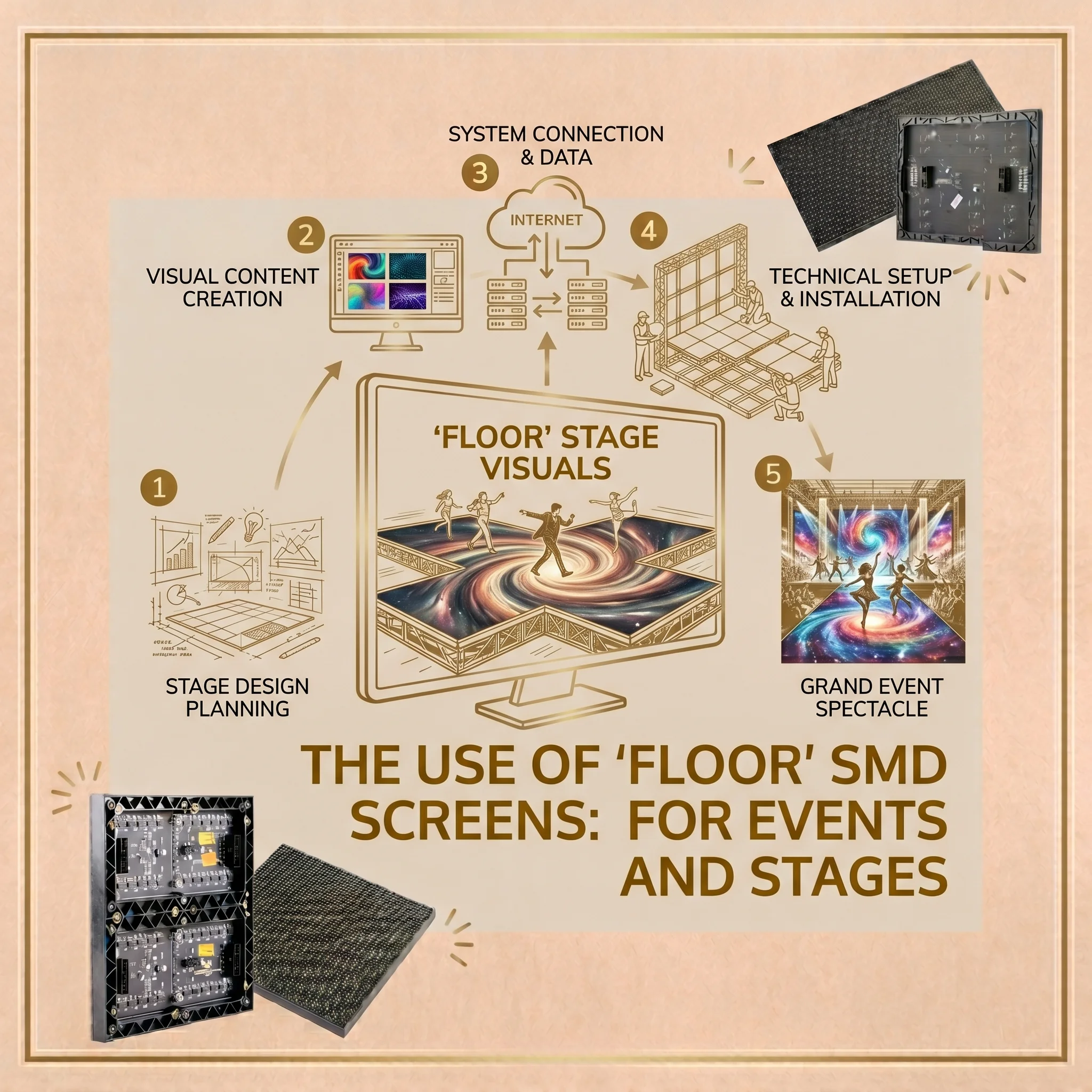
Live events in Pakistan, from concerts in Lahore to corporate summits in Islamabad and weddings in Karachi, increasingly use LED screens as part of the stage design. Alongside backdrops and side screens, some productions now use floor SMD screens: purpose-built LED floor panels that turn the stage surface itself into a display.
Traditionally, LED screens on stage were vertical: backdrops, side IMAG screens or hanging elements. The floor the performers walked on was usually wood, vinyl or carpet. A floor made from floor SMD screens can show changing visuals under the performers, which opens up new creative options for stage and lighting designers.
In this guide we explain how floor screens are used, what makes them different from ordinary wall panels, what to check for load rating and safety, and how to plan them into an event. Floor screens are a specialist product: the right choice always depends on the specific panel model, its manufacturer’s ratings and how it is installed.
The main advantage of floor SMD screens is that the performance space itself becomes part of the visual design. When a digital backdrop is paired with a matching LED floor, performers appear to stand inside the content rather than just in front of it.
For example, a theatre scene could show water rippling across the floor, or a music show could run geometric patterns on the floor in time with the music. Content can change from scene to scene, so one stage can carry several different looks during a single show.
This flexibility gives designers more control over the overall atmosphere, as long as the floor content is planned together with the lighting, cameras and the main screens.
Immersion depends partly on what the audience sees around and below the performers. A plain dark stage floor can break the effect of a large backdrop; an LED floor can continue the content into that space.
In Pakistani weddings, LED floors are sometimes used as a dance floor for Mehndi or Barat functions. Instead of a printed vinyl floor, the screen can show patterns such as flowers, geometric designs or the couple’s monogram.
This customisation appeals to clients who want a distinctive look. The light from the floor also affects how people look on camera, so photographers and videographers should be involved when choosing brightness and content.
Ordinary LED wall modules are not designed to be walked on. Laying standard wall panels on the floor can damage them and is unsafe. Floor screens are a separate product type, built with a strong cabinet frame and a protective top surface (commonly a polycarbonate or similar cover) designed to carry foot traffic.
Load capacity varies widely between models. Each manufacturer publishes its own rating for distributed load and point load, and these figures should be checked on the product datasheet for the exact panel you are using. Do not assume that a floor screen can carry heavy equipment, rolling loads or vehicles unless the manufacturer specifically rates it for that, and the stage structure underneath has been checked by a qualified engineer.
The supporting structure matters as much as the panels. Floor screens need a level, stable base or adjustable support legs set up according to the manufacturer’s instructions, so that panels sit flush and do not flex. Even rated panels can be damaged by impacts, sharp objects or loads beyond their rating.
The safety of performers walking or dancing on the floor is the main concern. A smooth, glossy surface can be slippery, especially with formal shoes or if anything is spilled on it.
Many floor screens use a textured or matte top surface to improve grip. How slip-resistant a surface is depends on the specific product, footwear and conditions, so check the manufacturer’s information, keep the surface clean and dry, and test it with the performers during rehearsal.
A matte surface can also help reduce reflections of stage lighting, which is useful for camera work. Viewing angles and image quality still vary between models, so view samples under your planned lighting before deciding.
Most floor screens simply play pre-made video content. Some systems add interactivity using sensors built into the panels or separate tracking cameras, together with software that generates effects in real time.
With an interactive setup, content can react to where people stand or move. For example, a ripple effect can appear where a dancer lands, or a light trail can follow a speaker across the stage.
Interactive floors need the right hardware, software and testing, and they add cost and complexity. They work best when the effect is planned as part of the show and rehearsed properly.
Corporate product launches and annual events often aim to present a brand as modern and innovative, and an LED floor can support that message.
At a product launch, the floor could show moving graphics that tie in with the main screen. Placing a vehicle or heavy product on an LED floor is only appropriate if the panels and the stage structure are specifically rated for that load and the setup has been approved by a qualified engineer; otherwise, heavy items should be placed on a separate, suitably rated platform.
For award ceremonies, a walkway or part of the stage can be built with floor screens, with animations triggered as each winner walks up. Used thoughtfully, this can add to the sense of occasion.
A good live event combines lighting, sound and video. Floor screens work best when they are not treated as a separate element but planned together with the lighting rig, audio and main video walls.
This is usually done by feeding the floor screens from the same media server or video processor as the other screens, and, where needed, using timecode so that video cues line up with the music and lighting. How precise this is depends on the equipment and the operator’s setup.
When the floor, backdrop and lighting are designed together, the floor becomes part of one visual picture rather than a separate effect.
Ambitious stage designs need reliable hardware. Standard wall panels must not be laid flat and walked on; you need panels designed and rated as floor screens.
Our Products section lists the screens we supply. Standard indoor panels like the BIA Indoor SMD Screen Module are suited to vertical backdrops, not to use as a walking surface. For a floor, ask us about floor-rated panels and their published load and surface specifications.
For outdoor stages, the vertical screens can use outdoor-rated panels such as the BIA Outdoor SMD Screen Module. Any floor screen used outdoors must also be rated by its manufacturer for outdoor use and for the expected weather.
Where a high-resolution backdrop is needed, a video wall such as the BIA HDR 4K LED Video Wall can be used alongside the floor screens.
Talk to SMD LED Screen about matching floor and wall screens so that brightness and colour look consistent across the stage.
Building a stage with floor screens takes planning, but rental-style floor panels are designed for repeated setup and teardown. Event setup windows are often short, so the installation plan should be agreed in advance.
Floor screens are typically modular cabinets with locking mechanisms and adjustable supports. An experienced crew following the manufacturer’s instructions can assemble them efficiently, but the actual time depends on the size of the floor, the venue, access and the crew.
Power and data cables are usually connected from cabinet to cabinet, which helps keep cabling tidy. Power distribution should be planned and connected by a qualified electrician, and cables should be routed and covered so they do not create trip hazards.
Floor screens can also be used for fashion shows. A runway built from LED floor panels lets designers control the look under the models’ feet.
For example, the floor could show fabric-like patterns that match the collection, or scenes such as desert, ice or night sky that set the mood for different parts of the show.
Creative uses like this can make a show more memorable and more shareable, although results depend on the content, the event and the audience.
Floor screens are a significant investment for any event company, so reliability matters. Their lifespan depends on the model, how carefully they are used, transported and stored, and whether loads stay within the manufacturer’s ratings.
Because the system is modular, a damaged module can usually be replaced without rebuilding the whole stage. Many floor panels allow modules to be removed from the top using the manufacturer’s tool. How quickly this can be done during a show, and whether it is safe to do so, depends on the product and the show; it is good practice to keep spare modules and agree a procedure with the crew in advance.
You can follow our latest updates and work on our Official Facebook Page.
Floor LED screens give stage designers a new surface to work with. When chosen and installed correctly, floor SMD screens can offer:
With careful selection, proper installation and rehearsal, floor screens can add a memorable dimension to concerts, weddings and corporate events.
If you are planning a concert, corporate event or wedding and want to explore LED floors or backdrops, we can help you compare options. Contact Us Today to discuss your stage design and get a quote based on your venue, size and requirements.
1. Are floor SMD screens safe for dancers to jump on?
Purpose-built floor screens are designed for foot traffic, including dancing, within the load ratings the manufacturer publishes for that model. Check the datasheet for distributed and point load ratings, make sure the support structure is installed correctly, and never use standard wall panels as a floor.
2. Are floor SMD screens slippery for speakers or performers?
Many floor screens have a textured or matte surface to improve grip and reduce glare. Slip resistance depends on the product, footwear and conditions, so keep the surface clean and dry and test it with performers during rehearsal.
3. Can I synchronize the video on the floor screens with the main backdrop?
Yes, this is common practice. Using a suitable video processor or media server, content on the floor and the backdrop can be run together so they look like one design. The exact setup depends on the equipment used.
4. How difficult is it to install floor SMD screens for a short event?
Rental floor panels are modular and designed for repeated setup, so an experienced crew can install them efficiently. Setup time depends on floor size, venue access and the support structure. Electrical connections should be made by a qualified electrician.
5. Do interactive floor SMD screens require complex programming?
Interactive floors need sensors or tracking hardware plus software. Some systems include ready-made effects such as ripples or light trails, but the setup still needs to be configured and tested before the event.

How touch-enabled LED displays can engage customers in shops, offices and museums, what hardware and software an interactive SMD screen…
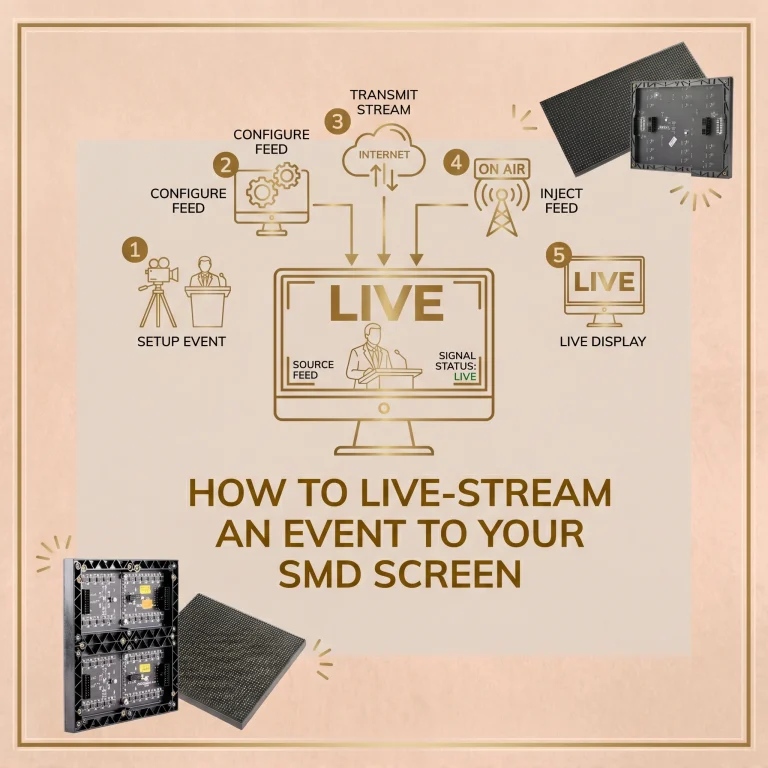
How to show a live event on your SMD LED screen: cameras, switchers, software, video processors, keeping delay low, remote…

Large public gatherings, including political rallies, often use LED screens so people far from the stage can see speakers. This…