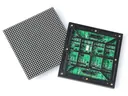
 Outdoor SMD Screens
 Indoor SMD Screens
 Flexible SMD Screens

What Is a “Refresh Rate” and Why Does It Matter for Your SMD Screen?
What Is a “Refresh Rate” and Why Does It Matter for Your SMD Screen? When choosing an LED display, many…
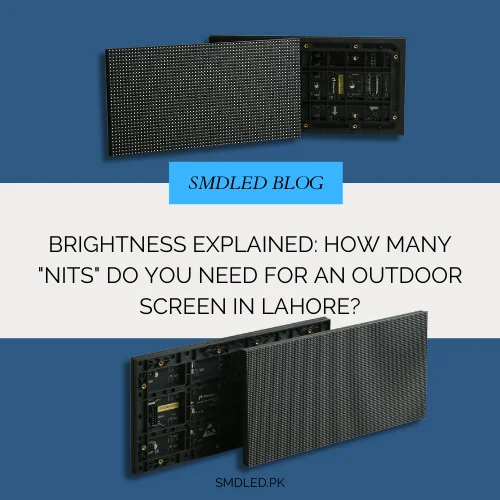
When planning an outdoor LED installation, a key question is how bright the screen should be. Outdoor SMD screen brightness in Lahore matters because of strong sunlight, dust, smog and long viewing distances. Too little brightness makes a screen hard to read in daylight; too much wastes power and causes glare at night.
This article explains what nits are and how to choose suitable brightness for your site. There is no single correct number: the right level depends on the screen’s orientation, sun exposure, surroundings, viewing distance, content and any local rules.
Nits measure luminance (brightness per area).
1 nit = 1 candela per square metre (cd/m²).
Higher nits mean the screen can be brighter, which helps readability in strong ambient light. Readability also depends on contrast: how much the screen’s surface reflects sunlight, and how dark it looks when off.
Lahore’s conditions affect how bright an outdoor screen needs to be:
• Strong sunlight, especially in summer
• Dust and pollution on the screen surface
• Winter smog and haze
• Bright daytime surroundings
Without enough brightness for the site, outdoor screens can look dull or hard to read.
Outdoor LED screens are typically specified at several thousand nits, far brighter than indoor screens. Exactly how much a particular site needs depends on:
• Orientation: a screen facing the sun for much of the day needs more than one in shade or facing north.
• Surroundings: bright backgrounds such as sky or light buildings make a screen look dimmer by comparison.
• Viewing distance and content: simple, high-contrast content is readable at lower brightness than detailed images.
• The specific product: its maximum brightness after calibration, contrast and surface treatment.
Ask suppliers for the product’s datasheet brightness (and whether it is measured before or after calibration), and if possible view a sample on site in daylight.
As a general guide to relative needs:
• Partly shaded plazas and frontages may need less brightness than fully exposed sites.
• Night-time levels should be much lower, to avoid glare for nearby residents and visitors.
• Screens in direct sun need more brightness to stay readable.
• Brightness must be controlled so it does not dazzle drivers, especially at night.
• Long viewing distances and open sky backgrounds often call for higher daytime brightness.
• Night dimming remains essential.
Outdoor-grade modules: BIA Outdoor SMD Screen Module. Check its datasheet for brightness and IP rating against your site.
Brightness and pixel pitch are separate specifications, but they interact:
• Products at different pitches can be designed for similar brightness; it depends on the LEDs and design, not the pitch alone.
• Power use depends on the LEDs, driver design, brightness setting and content, so compare datasheet figures rather than assuming a finer pitch always uses more power.
Coarser pitches such as P6 and P10 are common for outdoor advertising viewed from a distance, but the right pitch depends on the viewing distance.
Many outdoor screen controllers support automatic brightness control with a light sensor, or a brightness schedule.
Benefits
• Adjusts brightness to ambient light
• Reduces power consumption
• Reduces glare at night
• Can reduce wear on LEDs and power supplies
Automatic brightness control is strongly recommended for outdoor installations.
Higher brightness uses more power.
Efficient designs can help, for example
• Efficient LEDs and driver ICs
• Efficient power supplies
• Good heat dissipation
Compare datasheet power figures, and use automatic dimming to avoid running at full brightness when it is not needed.
Excessive brightness can cause
• Driver distraction and glare
• Visual discomfort
• Light nuisance for neighbours
Requirements for outdoor screens, including any limits on brightness or operating hours, are set by the relevant authorities and can change, so check the current rules for your location. Dimming alone does not make a screen safe or compliant: placement, content and approvals also matter.
Large outdoor video walls need consistent brightness and colour across all cabinets.
Use outdoor-rated products for outdoor video walls, such as the BIA Outdoor SMD Screen Module. Indoor products, including indoor fine-pitch video walls such as the BIA HDR 4K LED Video Wall, are designed for indoor brightness and conditions and should not be used outdoors unless the datasheet confirms outdoor brightness and weather protection.
Calibration helps ensure uniform brightness and a professional appearance.
Dust on the screen and haze in the air can reduce perceived brightness and contrast.
To manage this
• Clean the screen surface as the manufacturer advises, with power isolated and by trained staff
• Allow some brightness headroom in the specification
• Use clear, high-contrast content
These steps help keep the screen readable through the year.
When selecting brightness, consider:
• Sunlight exposure and orientation
• Viewing distance
• Surroundings
• Content type
• Local rules
Professional advice and a site visit help avoid under- or over-specifying.
Explore outdoor SMD screens, get guidance from our team, or follow our updates on Facebook.
Myth
• Higher brightness is always better
Reality
• Excessive brightness wastes power and causes glare
Myth
• Brightness does not affect lifespan
Reality
• Running LEDs harder generally makes them age faster; sensible brightness settings help
Outdoor screens are typically specified at several thousand nits. The right level for your site depends on orientation, sun exposure, surroundings and content; a site assessment is the best guide.
It may be in shaded locations or where the screen does not face the sun, but may struggle in direct sunlight. Compare the datasheet brightness with your site conditions.
Yes. Automatic dimming and efficient components help reduce consumption.
Many outdoor screen controllers support automatic brightness with a light sensor or schedule. Confirm this for the system you are buying.
Outdoor screens are subject to rules set by the relevant authorities, which may include brightness or operating conditions. Check the current requirements for your location.
Choosing suitable brightness, with automatic dimming, helps your outdoor screen stay readable by day and comfortable at night.
Explore SMD screen solutions, browse products, ask for a consultation, or follow us on Facebook.
Planning a screen in Lahore? See our SMD screens in Lahore page for local options, or ask for a free quote.
What Is a “Refresh Rate” and Why Does It Matter for Your SMD Screen? When choosing an LED display, many…
Understanding SMD Screen Resolution: 1080p vs. 4K Video Walls When investing in LED display technology, SMD screen resolution strongly affects…
DIP vs. SMD Technology: Which Is Better for Pakistan’s Climate? Choosing between DIP vs SMD technology is an important decision…