 Outdoor SMD Screens
 Indoor SMD Screens
 Flexible SMD Screens

Brightness Explained: How Many “Nits” Do You Need for an Outdoor Screen in Lahore?
Brightness Explained: How Many “Nits” Do You Need for an Outdoor Screen in Lahore? When planning an outdoor LED installation,…

LED display screens are built from smaller units called modules. Understanding SMD screen modules helps when buying, renting or maintaining an LED screen. In Pakistan, two module sizes come up often: 320×160 mm and 250×250 mm, though many other sizes exist.
This article explains what modules are, why size matters, and how to think about 320×160 versus 250×250 for different projects. Characteristics vary by manufacturer, so always check the specific product’s datasheet.
An LED display module is a small panel that contains:
• LED packages (SMD in most modules; some use DIP or COB packaging)
• Driver ICs
• A printed circuit board
• Power and data connectors
Modules are fitted into cabinets, and cabinets are joined to form a full screen or video wall.
Module size affects:
• Which cabinets it fits, and therefore possible screen sizes
• Maintenance and spare-parts availability
• Compatibility with existing screens
• Cost
Module size does not by itself determine image quality; that depends on pitch, LEDs, driver ICs and calibration.
320×160 mm is a widely used module size, especially in fixed installations in Pakistan.
• Rectangular shape
• Offered by many suppliers
• Fits many cabinet designs
• Replacements are often easy to source
• Wide choice of products
• Often economical for large screens
• Outdoor advertising screens
• Indoor signage
• Some rental screens
Even with a common size, replacement modules must match the original’s pitch, scan type, driver ICs and connectors, and ideally come from the same batch for colour matching.
See, for example, the BIA Outdoor SMD Screen Module; ask us for its module dimensions.
250×250 mm square modules are common in rental and video wall systems, often in 500×500 mm or 500×1000 mm cabinets.
• Square format
• Fits standard rental cabinet sizes
• Convenient for building screens from square cabinets
• Widely used in rental systems
• Rental video walls
• Event stages
• Some fixed indoor walls
Neither shape is inherently higher-end: alignment and image quality depend on the cabinet’s precision, the modules and calibration. Fine-pitch products use many different module sizes. For example, the BIA HDR 4K LED Video Wall range uses its own module and cabinet format; check the datasheet.
Typical differences:
320×160
• Rectangular
• Common in fixed-installation cabinets
• Often widely available locally
250×250
• Square
• Common in rental cabinet systems
• Cost depends on the product
Both serve different design and installation needs.
Modules are made in many pixel pitches.
320×160 modules
• Often seen in pitches such as P2.5, P4, P5, P8 and P10
250×250 modules
• Often seen in pitches such as P2.6, P2.9, P3.9 and P4.8
Module size does not determine pixel pitch; available combinations vary by manufacturer.
Consider maintenance when choosing modules.
• Plan spare modules from the same production batch at the time of purchase, whichever size you choose.
• Check how modules are removed: front or rear service, magnetic or screw fixing.
• Replacement and repair should be carried out by trained technicians with the power isolated.
Availability of compatible spares in Pakistan matters for long-term installations; ask your supplier.
Modules must fit the cabinet exactly.
320×160 modules
• Common in fixed-installation cabinets of various sizes
250×250 modules
• Often paired with rental cabinets with quick-lock systems
Always confirm module and cabinet compatibility before ordering.
Both sizes exist in indoor and outdoor versions. Indoor and outdoor modules differ in brightness and sealing, not in size.
Indoor use
• Usually finer pitches
• Indoor brightness and protection
Outdoor use
• Often coarser pitches
• Outdoor brightness and IP-rated sealing
See, for example, the BIA Indoor SMD Screen Module.
Module cost depends on:
• Pixel pitch
• LED brand and quality
• Driver IC quality
• Indoor or outdoor design
• Module size
Size alone does not decide cost. Include spare parts and maintenance in your budget.
Consider:
• Fixed or rental installation
• Screen size and cabinet options
• Pixel pitch
• Maintenance access and spares
• Budget
Professional guidance helps ensure compatibility. Browse our SMD screens, ask us for advice, or follow our updates on Facebook.
Trends include:
• Finer pitches
• Lighter designs
• Faster front-service maintenance
• More COB and other packaging options
320×160 and 250×250 are likely to remain common sizes, alongside many others.
They are the basic building blocks of LED screens: small panels of LEDs, driver ICs and circuitry, fitted into cabinets.
Neither is better in general. It depends on the cabinet system, installation type and the products available.
They are often easier to source locally, but replacements must match the original specification. Ask your supplier about spares.
They suit square rental cabinets well. Video wall quality depends on cabinet precision, modules and calibration rather than module shape.
Yes, modules are designed to be replaced individually by trained technicians, ideally with spares from the same batch.
Choosing compatible modules helps with installation, maintenance and long-term performance. Whichever size you choose, check compatibility and plan spares.
Explore SMD screen solutions, browse products, get expert consultation, or follow us on Facebook.

Brightness Explained: How Many “Nits” Do You Need for an Outdoor Screen in Lahore? When planning an outdoor LED installation,…
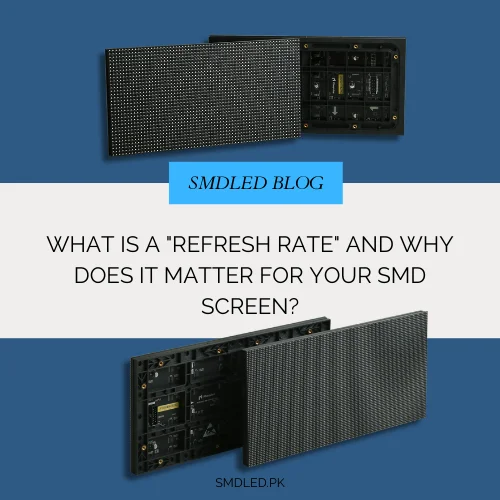
What Is a “Refresh Rate” and Why Does It Matter for Your SMD Screen? When choosing an LED display, many…

Understanding SMD Screen Resolution: 1080p vs. 4K Video Walls When investing in LED display technology, SMD screen resolution strongly affects…