 Outdoor SMD Screens
 Indoor SMD Screens
 Flexible SMD Screens

Top Trends in SMD Screen Technology for 2024
Top Trends in SMD Screen Technology for 2024 SMD screen technology keeps developing, and the trends below shaped the market…


Conference rooms are where presentations are given, video calls are held and decisions are made, so the display matters. LED video walls, including SMD Screens P3, are one option alongside large LCD displays and projectors. This article explains how to decide whether an LED wall suits your room and which pixel pitch to consider, rather than recommending a single “best” product for every room.
SMD LED screens are modular, so they can be built to fit a wall without bezels, and they offer good brightness and wide viewing angles. In conference rooms, boardrooms and auditoriums, this can help everyone see the content clearly, provided the pixel pitch and size suit the room.
“P3” refers to the pixel pitch: roughly 3 mm between pixel centres. Pixel pitch, together with screen size, determines the screen’s native resolution. For example, a wall about 3 m wide at 3 mm pitch has roughly 1,000 pixels across, which is fewer than a 1080p image (1,920 pixels across). So a P3 wall of that size will not show a full-HD laptop image pixel-for-pixel; the processor will scale it.
Work out the native resolution of the proposed screen (width ÷ pitch and height ÷ pitch). If you need to show small text, spreadsheets or detailed drawings, check that the resolution is high enough for your content, or choose a finer pitch or larger screen.
A common rule of thumb is that the minimum comfortable viewing distance in metres is roughly the pitch number, so about 3 m for P3. If people in the front row sit closer than that, they may see the pixel structure, and a finer pitch (such as P2.5, P2 or P1.8) may be better. Measure the distance from the nearest seat to the screen before deciding.
P3 can work well in larger meeting rooms, training rooms and small auditoriums where the nearest viewers are a few metres away and the content is mainly slides and video.
Finer pitches usually cost more per square metre. P3 can offer a balance between clarity and cost where viewers are not too close.
Image quality also depends on calibration, refresh rate, grey-scale performance at low brightness, and the video processor. Conference rooms usually need much lower brightness than signage, so ask how the screen performs at low brightness. If you hold video calls or record presentations, ask about refresh rate and how the screen looks on camera, and arrange a demonstration if possible.
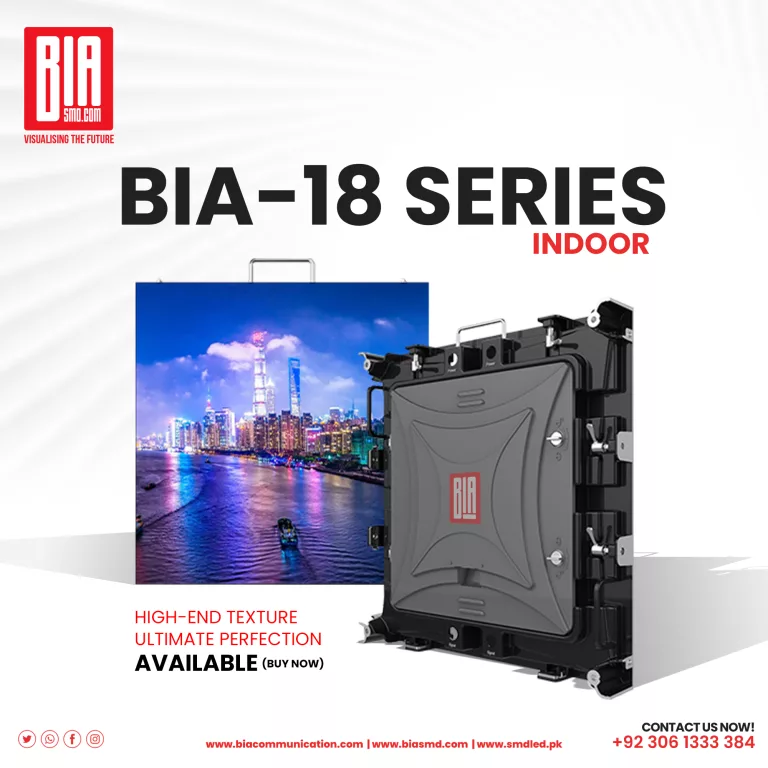
Indoor LED modules such as the BIA Indoor SMD Screen Module are available in different pitches. Ask for the pitch, brightness range, refresh rate and cabinet size, and compare quotes for P3 and finer pitches for your room size.
Slim LED modules and cabinets can give a neat, modern installation. Check depth, mounting method and front or rear service access for your wall.
Projectors can be cost-effective but may look washed out in bright rooms and need light-source maintenance. Large LCD displays offer high resolution at close range and are often cost-effective for small rooms, but are limited in size or have seams when tiled. LED walls offer bezel-free large sizes and good brightness, but fine pitches can be costly. The right choice depends on room size, lighting, content and budget.
LED walls have adjustable brightness, so they can be set for both bright and dim rooms. Correct brightness and colour settings help keep viewing comfortable.
LED walls connect through a video processor or controller to your sources, such as laptops, room PCs and video conferencing systems. Microphones, speakers and cameras are separate components. Check input types, resolution handling and compatibility with your conferencing system during design.
SMDLED supplies SMD screens across Pakistan, including Karachi, Lahore, Islamabad and Faisalabad. Ask us for specifications and quotes for your room.
Browse the range on our products page.
BIA is SMDLED’s own product brand, so its products are offered alongside the other brands we sell. When comparing options, ask for the same specifications for every product, whichever brand it is. You can also see the BIA range at BIA SMD.
To choose the right screen: measure the wall and the distance from the nearest seat; decide what content you will show; calculate the native resolution for each pitch you are considering; check brightness range, refresh rate and processor compatibility; and compare total cost, including installation and support. P3 suits some rooms; others will be better served by a finer pitch or a different display type.
As fine-pitch LED becomes more affordable, LED walls are becoming more common in meeting rooms. Whether one suits your room today depends on the factors above.
Have the screen installed by qualified installers on a structure suitable for its weight, with electrical work done by a qualified electrician. Ensure good ventilation, and clean the screen only as the manufacturer recommends, with the power off.
LED walls such as SMD Screens P3 can work well in conference rooms when the pitch, size and resolution suit the room and content. Measure your room, check the numbers and compare options before deciding.
Need one large, seamless picture? See the BIA HDR 4K LED Video Wall, compare options on our indoor SMD screens page, or read 1080p vs 4K video walls.
Top Trends in SMD Screen Technology for 2024 SMD screen technology keeps developing, and the trends below shaped the market…
How to Optimize Your SMD Screen for Outdoor Use: 7 Key Factors Outdoor SMD screens offer bright, changeable content for…
5 Essential Tips for Maintaining Your SMD Screen Introduction SMD (Surface Mount Device) LED screens are a significant investment, used…