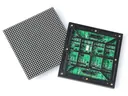
 Outdoor SMD Screens
 Indoor SMD Screens
 Flexible SMD Screens

SMD vs. LCD Video Walls: The Pros and Cons for Pakistani Businesses
SMD vs. LCD Video Walls: The Pros and Cons for Pakistani Businesses Businesses across Pakistan use large display systems for…
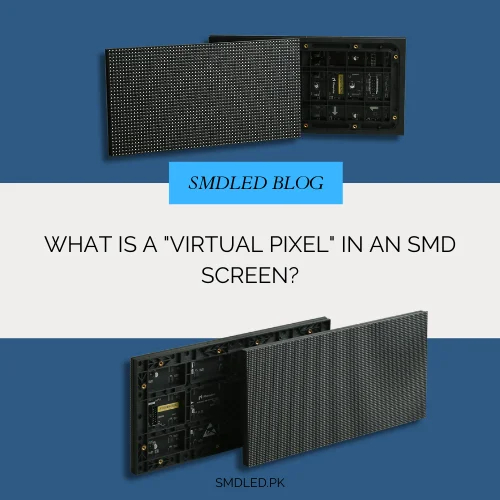
When comparing LED display specifications, you may see the term virtual pixel in SMD screen. It can sound like higher resolution for free. In reality, virtual pixel (also called pixel sharing) is a specific technique with trade-offs that depend on how it is implemented.
This article explains what virtual pixels are, how they work, and how to compare a virtual-pixel screen with one quoted in real (physical) pixels.
First, some terms:
• LED chip (die): A single light-emitting chip of one colour (red, green or blue).
• LED package: The component soldered to the board. An SMD “3-in-1” package usually contains one red, one green and one blue chip.
• Physical pixel: The group of red, green and blue sources that forms one full-colour point. In most SMD screens, one package is one physical pixel.
A virtual pixel system uses hardware layout and signal processing together to address light sources in overlapping groups, so neighbouring pixels share sub-pixels. This can create more addressable points than there are physical pixels, increasing perceived detail. Virtual pixel technique is most associated with screens whose red, green and blue sources are separate, such as many DIP screens and some special layouts, rather than standard 3-in-1 SMD packages.
Each physical pixel has red, green and blue sources. In a virtual pixel layout, the controller treats sources from adjacent physical pixels as belonging to extra “in-between” pixels and drives them accordingly. The result can be smoother edges and finer apparent detail, especially in moving images and when viewed from a distance.
The extra pixels are created by sharing; they are not separate physical light points.
Real (physical) pixel
• Each pixel has its own red, green and blue sources
• Resolution equals the physical pixel count
Virtual pixel
• Pixels share sub-pixels with their neighbours
• Higher addressable resolution than the physical count
• Detail improvement depends on content, viewing distance and processing
When comparing quotes, always ask whether resolution and pixel pitch are stated in physical or virtual pixels.
Virtual pixel techniques were developed to:
• Improve perceived resolution on coarser pixel pitch screens
• Achieve more detail without increasing the number of LEDs
• Make large screens look sharper at lower cost
More apparent detail without adding LEDs.
Text and graphics can look smoother than on a screen with the same physical pitch and no pixel sharing.
Fewer light sources for a given apparent resolution.
Virtual pixels generally cannot match the clarity of a screen with the same number of physical pixels, particularly for fine text and static images.
Depending on the implementation, some content may show colour fringing or artefacts, especially up close.
Virtual-pixel figures can make a screen look finer on paper than it is physically. Compare like with like.
Effects on brightness depend on the design; check the datasheet brightness figure rather than assuming either way.
Virtual pixel layouts have been used on some outdoor screens viewed from long distances. Whether one suits your project depends on the specific model, its brightness, the viewing distance and the content. For most new outdoor SMD projects, buyers compare physical pitch and resolution, but there is no universal rule. Ask for datasheets and view a sample.
See the BIA Outdoor SMD Screen Module for outdoor options.
Indoors, viewers are usually close, so physical fine pitch is generally the priority for clear text and graphics. Virtual pixel benefits are smaller at close range.
See BIA Indoor SMD Screen Module options.
High-end video walls usually rely on physical fine pixel pitch, high refresh rate and careful calibration. See the BIA HDR 4K LED Video Wall for an indoor fine-pitch example.
As fine physical pitches have become more affordable and standard 3-in-1 SMD packages more common, virtual pixel is seen less often in mainstream products, though it still appears in some designs.
• Virtual pixel equals true HD
• Virtual pixel is always better than physical pixel
• Virtual-pixel resolution can be compared directly with physical resolution
Understanding the difference helps you compare quotations fairly.
Ask:
• Are pitch and resolution quoted in physical or virtual pixels
• How close will viewers be
• Will you show fine text or mainly video
• What do the datasheet brightness and test samples show
Browse SMD screen options, get expert consultation, or follow our updates on Facebook.
As physical fine pitch becomes cheaper, virtual pixel is likely to remain a niche technique rather than the industry standard.
A hardware-and-processing technique in which neighbouring pixels share red, green and blue sources, creating more addressable points than physical pixels.
No. Virtual pixels share light sources and generally do not match the clarity of the same number of physical pixels.
It depends on the model, viewing distance and content. Compare datasheets and samples rather than relying on a general rule.
It depends on the design. Check the brightness figure on the datasheet.
It is less common in mainstream products today, as fine physical pitches have become more affordable.
Knowing whether a specification uses physical or virtual pixels helps you compare screens fairly and choose one that performs well in your setting.
Explore our SMD screens, browse products, get expert guidance, or follow our updates.

SMD vs. LCD Video Walls: The Pros and Cons for Pakistani Businesses Businesses across Pakistan use large display systems for…
The Complete Guide to SMD Screen Modules (320×160 vs. 250×250) LED display screens are built from smaller units called modules.…
Brightness Explained: How Many “Nits” Do You Need for an Outdoor Screen in Lahore? When planning an outdoor LED installation,…